Ask any seasoned lifter, and they'll tell you that what you do outside the gym is just as important as what you do inside. A common rule of thumb is to wait 24-48 hours after light to moderate training and anywhere from 48-72+ hours after a truly intense session. These aren't just arbitrary numbers; they're your safeguard against overtraining, giving your muscles the time they need to rebuild and come back stronger.
Your Quick-Reference Muscle Recovery Time Chart
Figuring out your recovery schedule is the cornerstone of a smart training plan. If you jump back in too soon, you're just breaking down muscle that hasn't finished repairing itself, which is a fast track to plateaus and injuries. A good muscle recovery time chart acts as a reliable starting point, translating complex exercise science into a practical guide for your week.
This chart gives you a bird's-eye view of recovery times based on how hard you pushed yourself.
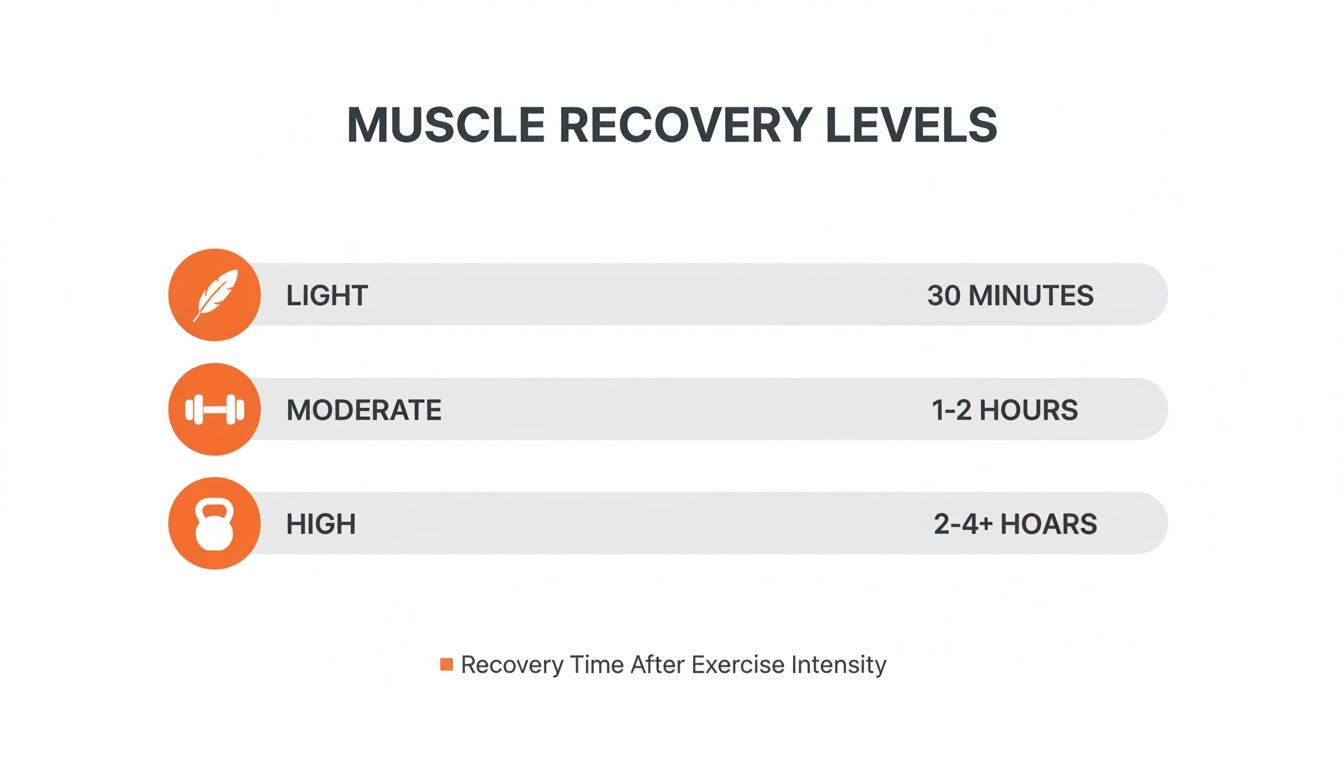
As you can see, the recovery demands shoot up dramatically with intensity. That's exactly why you feel wiped out for days after a heavy leg day, but you could probably handle another light cardio session tomorrow. This simple principle is everything when it comes to structuring your training split.
How To Use The Recovery Chart
Getting started with the chart is simple. First, think about the intensity of your last workout. Then, consider the size of the muscle group you worked. It's a well-known fact among lifters that larger muscle groups—think your back and quads—take a bigger hit and demand more downtime than smaller ones like your biceps or calves.
To give you an even clearer picture, I've put together a table that breaks down these timelines further.
Muscle Recovery Time Estimator by Intensity and Muscle Group
Here’s a more detailed look that combines both workout intensity and muscle group size to give you a solid estimate of your recovery window in hours.
| Muscle Group Size | Light Intensity (e.g., Warm-up, Deload) | Moderate Intensity (e.g., Hypertrophy, 8-12 reps) | High Intensity (e.g., Strength, 1-5 reps, Failure) |
|---|---|---|---|
| Small Muscles (Biceps, Calves, Forearms) | 24 Hours | 48 Hours | 72 Hours |
| Large Muscles (Quads, Hamstrings, Back, Chest) | 24-36 Hours | 48-72 Hours | 72+ Hours |
The big takeaway here? Notice that going all-out on large muscles can easily demand 72 hours or more before you're truly recovered. This is precisely why smart lifters build their weekly schedules with rest days or split their workouts to avoid hitting the same big muscle groups back-to-back. Think of these numbers as your baseline—your starting point. From here, you'll need to fine-tune based on the personal factors we'll dig into next.
Understanding the Science of Muscle Repair
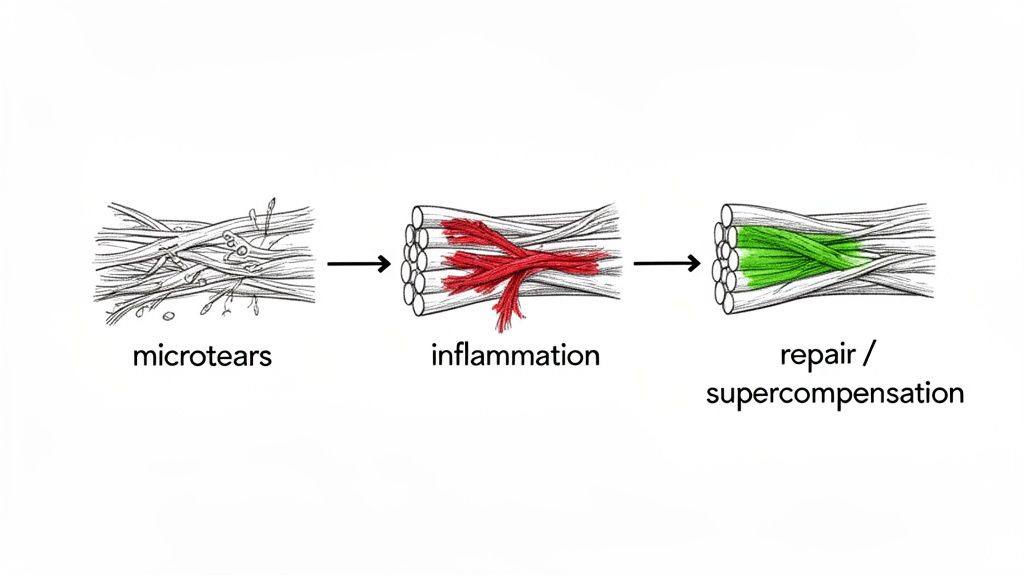
To get the most out of a muscle recovery time chart, it helps to first understand what’s actually going on inside your muscles after you train. When you lift weights or do any kind of strenuous exercise, you create tiny, microscopic tears in your muscle fibers. This might sound bad, but it’s the exact stimulus your body needs to start the process of getting stronger.
This initial damage is the starting gun for a complex repair process. Your body responds to these micro-tears with inflammation, sending special cells to the site to clear away the damaged bits and lay the groundwork for rebuilding. This is the very essence of muscle adaptation.
Supercompensation: The Goal of Recovery
The real magic happens in a phase called supercompensation. As your body repairs these damaged muscle fibers, it doesn't just patch them up to their original state. It builds them back slightly thicker and stronger than before, preparing them to better handle that same stress in the future.
This adaptation is the entire reason we train. Recovery isn't just about taking a break; it's the critical period where all your hard work in the gym pays off and your body builds the strength and size you're after. If you cut this phase short, you're robbing yourself of potential gains.
Think of each workout as a request for an upgrade. The recovery period is when your body actually installs that new, stronger hardware.
What About Muscle Soreness?
So, where does that familiar post-workout ache fit into all this? Delayed Onset Muscle Soreness (DOMS) is the pain and stiffness that usually kicks in and peaks around 24 to 72 hours after a particularly tough or new workout. It’s a direct result of the inflammation and micro-damage that happens during the repair cycle.
But here’s a key point: soreness is an unreliable guide to recovery. While it definitely tells you that you’ve challenged your muscles, the absence of soreness doesn't mean your workout was a waste of time. As your body gets used to an exercise or routine, you'll naturally experience less DOMS.
This is precisely why just "going by feel" can lead you astray. Understanding the science behind recovery allows you to use a data-driven tool, like a recovery time chart, to make smarter decisions. It helps ensure you're giving your body the time it absolutely needs to supercompensate and come back stronger.
Key Factors That Influence Your Recovery
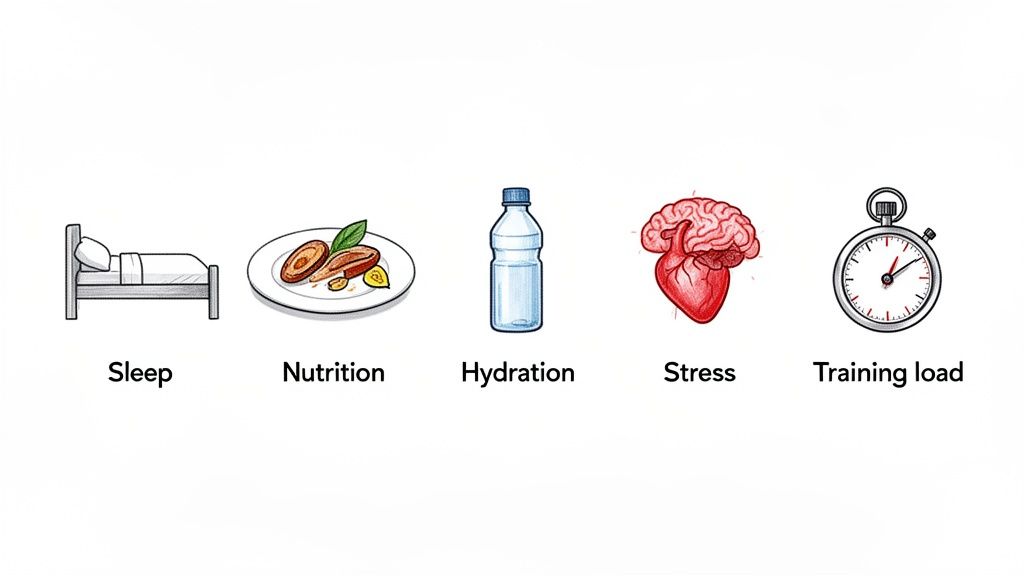
While a muscle recovery time chart gives you a great baseline, your actual recovery timeline is always going to be personal. Think of the chart as a map—your lifestyle, habits, and even genetics determine how fast you travel. Two people can crush the exact same workout and have totally different recovery needs.
When you start to understand these variables, you can make smarter adjustments and turn generic advice into a plan that actually works for you. Everything from how hard you train to how well you slept last night directly impacts how quickly your muscles repair and grow stronger.
Training Intensity and Volume
The single biggest factor dictating your recovery time is how hard you’re actually training. The more intensity and volume you throw at your muscles, the more damage you create, and the longer it takes to repair. A light deload session might only need 24 hours to bounce back from, whereas a monster leg day could easily sideline you for 72 hours or more.
Taking sets to absolute failure is a whole different beast. It’s incredibly taxing on not just your muscles but your central nervous system, too. Studies have shown that training to failure can leave you in a recovery hole for up to 72 hours. But if you stop just a rep or two short, your performance can rebound much faster, often within 24 to 48 hours. Getting a feel for this difference is a game-changer for managing fatigue. For a deeper dive, check out our guide on how training frequency impacts muscle growth: https://www.builtworkout.com/blog/training-frequency-for-hypertrophy.
Sleep and Nutrition
Recovery doesn't just happen; your body has to actively work at it, and that requires resources. The two most important ones? Sleep and nutrition. When you're in deep sleep, your body releases growth hormone, which is absolutely critical for tissue repair. If you consistently get poor sleep, you're slamming the brakes on your progress, no matter how perfect your training is.
And then there's nutrition, which provides the raw materials for rebuilding muscle. The big players are:
- Protein: Getting enough protein is non-negotiable for repairing damaged muscle fibers. Focus on a steady intake throughout the day rather than obsessing over a tiny "anabolic window" right after your workout.
- Carbohydrates: Carbs are your body’s go-to fuel for intense exercise. You need them to restock the muscle glycogen you burned during your session.
- Hydration: Don't forget water. It's essential for getting nutrients into your cells and flushing out all the metabolic junk your body creates during a tough workout.
You can't build a house without bricks and mortar. In the same way, your body can't build new muscle tissue out of thin air. You have to give it the protein, carbs, and nutrients it needs to get the job done.
Stress and Lifestyle Factors
Finally, what happens outside the gym has a huge impact on what happens inside. High levels of mental stress from work or your personal life spike cortisol, a hormone that can get in the way of muscle repair and even encourage muscle breakdown.
This is why looking at recovery from all angles is so effective. If you’re looking for more ways to optimize the process, exploring expert advice on how to speed up muscle recovery can give you some great ideas. By dialing in your training, prioritizing sleep and nutrition, and keeping stress managed, you put yourself in the driver's seat of your own recovery.
Using the Chart to Build a Smarter Workout Split
A muscle recovery chart is more than just a list of numbers—it's your roadmap for building a workout plan that actually works and that you can stick with. Once you understand these recovery timelines, you can stop doing random workouts and start training with real intention. This is the kind of strategic thinking that separates beginners from athletes who make consistent, long-term gains.
The basic idea is simple: structure your workout split so that while one muscle group is working, others are in active recovery. This constant rotation is your best defense against overtraining and ensures you’re always hitting muscles that are fresh, fully repaired, and ready for a new stimulus.
Designing a Split Around Recovery Timelines
Let's look at how this works in the real world. Two of the most common and effective training splits are the Push-Pull-Legs (PPL) and the Upper/Lower split. There's a reason they're so popular—they work because they're built around the logic of recovery. They automatically create the downtime your muscles need to repair before you hit them again.
Here’s how they line up with our recovery chart:
Push-Pull-Legs (PPL): This split groups muscles by their function. For instance, Push Day hits your chest, shoulders, and triceps. The next day is Pull Day, which works your back and biceps, giving all your "pushing" muscles a full day of rest. Then comes Leg Day, which allows your entire upper body another day to recover. By the time you get back to your next Push Day, you've had at least 48-72 hours of rest, which falls right in line with the chart’s recommendations for moderate to high intensity.
Upper/Lower Split: Here, you're just dividing your training between upper body and lower body days. After you train your upper body, you give it a complete break while you focus on your lower body in the next session. This setup naturally provides the 48 hours needed for recovery before you circle back to the same muscle groups.
Practical Application for Better Results
Science backs this up. The standard recommendation is to wait a minimum of 48 hours before training the same muscle group again. One study really drives this home: after just 24 hours of rest, only 50% of participants could match their previous rep performance. But when they waited 48 hours, that number jumped to 80%, showing a massive return of strength.
This is exactly why just "toughing it out" and training sore muscles is a recipe for stagnation. If you want a deeper dive into structuring your week for maximum gains, check out our comprehensive guide on creating a 5-day workout split. Using a muscle recovery chart to guide your schedule is one of the smartest, most impactful adjustments you can make to your training.
Comparing Active Recovery and Passive Rest
After a brutal workout, what's your first instinct? If it’s to become one with your couch, you’re not alone. That’s called passive rest, and it’s exactly what it sounds like: complete inactivity. While it definitely has its time and place, it’s not always the fastest route back to feeling 100%.
Then there’s the other option: active recovery. This means doing some form of low-intensity, low-impact exercise on your supposed “off” days. Think of it as gently helping the repair process along instead of just waiting for it to finish on its own. The point isn't to cause more muscle damage, but to get the blood flowing and support the work your body is already doing.
The Case for Active Recovery
The main benefit of moving on your rest days comes down to circulation. By boosting blood flow, you’re essentially creating an express delivery system that brings fresh oxygen and nutrients to your tired muscles. At the same time, it helps clear out the metabolic junk left behind after a tough session.
This isn't just about "staying busy." It's a strategic move. A little intentional, light activity can be the difference between feeling ready to go in 48 hours versus still dragging your feet after 72.
So, what does good active recovery look like? Here are some solid options:
- Light Cardio: We’re talking a casual walk, a slow spin on a bike, or an easy swim for 20-30 minutes. The goal is movement, not more stress.
- Stretching and Mobility Work: Gentle dynamic stretches or a session with a foam roller can do wonders for tight muscles and help you feel less locked up.
- Yoga: A restorative yoga class is perfect. It’s all about light movement and breathing, making it an ideal choice for a rest day.
If you want to dig deeper into this, check out our guide on how to properly incorporate cardio on rest days.
When Doing Nothing Is the Right Move
As great as active recovery can be, sometimes the best thing you can do for your body is absolutely nothing. Passive rest is crucial when you're dealing with a level of stress that goes way beyond just sore muscles.
Listen to your body. Opt for complete rest if you find yourself in these situations:
- You’re feeling mentally fried and physically drained.
- You’re coming down with something or are already sick.
- You just finished a session that completely wrecked your central nervous system, like hitting a new one-rep max.
The science backs up the idea of moving on your off days. Research shows that active recovery can speed up lactate clearance by 20-40% and help you get back to peak performance up to 50% faster than if you just sat still. To really get into the weeds, you can read more about the science of recovery techniques and see how it all works.
How the Built Workout App Personalizes Your Recovery
A static chart is a great starting point, but let's be honest—it’s a one-size-fits-all solution. It can't know how well you slept last night, how stressful your day was, or your unique genetics. To really get your training right, you need something that adapts to you, in real time. This is where smart technology stops being a gimmick and starts becoming a serious training partner.
The Built Workout app takes the guesswork out of recovery and turns it into something you can see and act on. Forget trying to remember how sore you are. The app analyzes your tracked workout data and shows you a live, color-coded map of your body, indicating exactly which muscles are ready to go and which need a break.
See Your Readiness to Train at a Glance
This simple visual system cuts through the noise. The colors tell you everything you need to know about your muscle readiness, giving you clear, actionable feedback.
- Green: The muscle is fully recovered. You're clear to hit it hard again.
- Yellow/Orange: It's still in the repair shop. A high-intensity session for this muscle is probably not the best idea.
- Red: This muscle is heavily fatigued. Pushing it now is a bad move; give it more time to rest and grow.
Here’s what that looks like in the app.
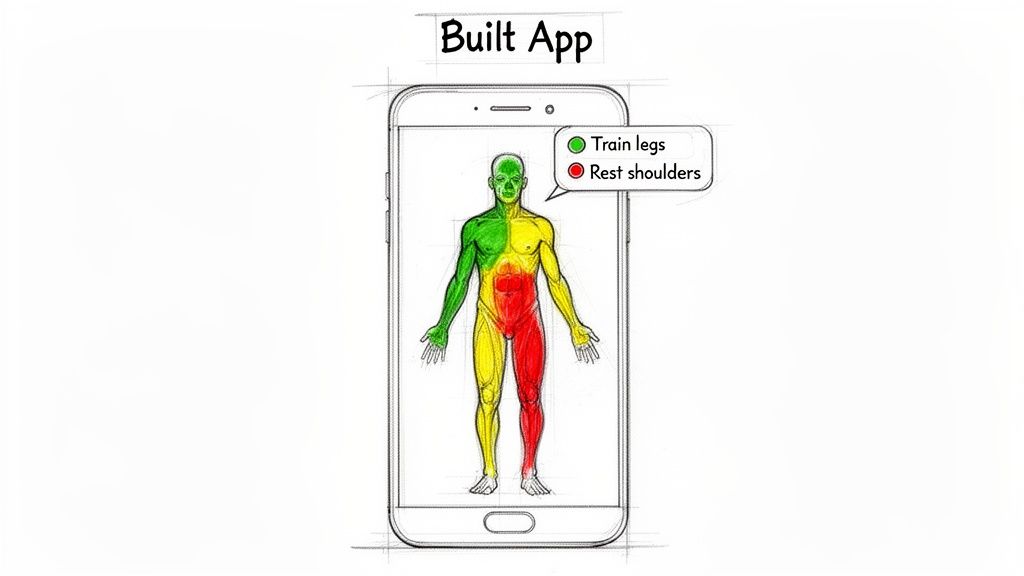
One look at this and you know your chest and triceps are still recovering from the last session, but your back and biceps are fresh and good to go.
AI Coaching That Works With Your Body, Not Against It
The real magic happens when this data actually drives your workout plan. Built’s AI coach looks at your recovery map and adjusts its recommendations on the fly. If your chest is lit up in red from Monday’s push day, the app is smart enough not to schedule another heavy bench session for Tuesday.
Instead, it might suggest you train a muscle group that’s fully green or guide you through a lighter, active recovery day. This is the key to preventing overtraining and making consistent, long-term progress—you’re always working at the right intensity for your body's current state.
This approach transforms your workout log into an intelligent feedback loop. Every set and rep you track gives the app the data it needs to build a smarter plan. If you want to dive deeper into this, you can learn more about how a personalized workout plan with an app is constructed. It’s about making sure every single workout is productive, based on real data, not just a pre-written schedule.
Troubleshooting Common Recovery Problems
Even the most well-designed workout plan can run into roadblocks. When it comes to recovery, knowing how to read the signs and adjust on the fly is what separates sustainable progress from frustrating burnout. Think of your body’s feedback not as a problem, but as valuable data for making smarter training decisions.
Are you constantly sore? Struggling to add even a little weight to the bar? Feeling run-down all the time? These are your body’s signals that something in your recovery-and-training equation isn't adding up. Pushing through these signs is a recipe for hitting a plateau, or worse.
What to Do When a Muscle Is Still Sore
So, it's chest day on your schedule, but your pecs are still screaming from your last bench session. What do you do? Plowing ahead and training a muscle that's still significantly sore is rarely a good idea—it's a clear sign the repair process isn't finished yet.
Instead of forcing it, here are a few smart moves:
- Shuffle Your Split: If your legs feel fresh and ready to go, swap today for leg day. A simple change like this keeps your momentum going while giving your chest the extra 24 hours it obviously needs to finish recovering.
- Try Active Recovery: A light walk, some gentle stretching, or a low-intensity bike ride can do wonders. This boosts blood flow to the sore area, which can help ease the tightness without creating more muscle damage.
- Train Something Else: Work on a completely different muscle group that feels 100%. Maybe it's a great day to hit back or arms.
Adjusting for Stress and Stalled Progress
Let's be real—life happens. A stressful week at work, a few nights of bad sleep, or a shift in your diet can absolutely wreck your recovery and leave you feeling weak in the gym. This is a classic recipe for hitting a training plateau, where your numbers just stop moving.
If you feel that kind of deep fatigue setting in, it's time to pull back before you burn out. This isn't just muscle soreness; it's systemic fatigue, and it's a major warning sign. We dive deep into this topic in our guide on how to prevent overtraining.
Think of a deload week not as a step back, but as a strategic pause to sharpen the axe. Reducing your training volume and intensity for a week can reset your system, letting you return stronger and more motivated.
Your Muscle Recovery Questions, Answered
Even with the best data and charts, a few specific questions always pop up. Let's get straight to the point and tackle some of the most common ones I hear from lifters.
Can You Work Out a Sore Muscle?
The short answer? It’s usually not a great idea. That soreness you feel, often called Delayed Onset Muscle Soreness (DOMS), is a pretty direct signal from your body that it's still busy with repairs.
Jumping back into a heavy session on a sore muscle can disrupt that healing process and even up your risk of injury. A much better move is to focus on active recovery—think light walking or cycling to get the blood flowing—or simply hit a different muscle group that feels fresh and ready to go.
Do Recovery Needs Change with Experience?
They absolutely do. If you're new to lifting, you'll probably feel soreness more intensely and need a bit more downtime. Your body is still figuring out how to adapt to these new demands.
On the flip side, a seasoned lifter's body is incredibly efficient at repairing muscle and bouncing back. But—and this is a big but—as experienced lifters push for new gains with insane volume or intensity, their recovery needs can shoot right back up. That’s why learning to listen to your body is a skill that never loses its value, whether you're on day one or year ten of your training journey.
Stop guessing and start seeing your recovery. Built Workout's AI-powered app visualizes your muscle fatigue on a color-coded heatmap, so you always know which muscles are ready to train. Download it for free at https://www.builtworkout.com.