
When it comes to building muscle, the golden rule seems to be hitting each muscle group at least twice per week. While the total amount of work you do each week (weekly volume) is what really drives growth, how you split up that work can make a massive difference. Spreading your volume across multiple sessions almost always beats cramming it into one marathon workout for each body part.
Decoding The Training Frequency Puzzle

So, how often should you really be training a muscle for maximum growth? It's one of the oldest debates in the gym, but modern science is giving us a much clearer picture. Think of your total weekly volume as the king of muscle building. If volume is king, then frequency is the queen—it’s the strategic partner that organizes the kingdom and makes sure everything runs smoothly.
Imagine you're studying for a huge final exam. You could pull an all-nighter and try to cram everything in at once. This is a lot like the old-school "bro split," where you'd blast your chest once a week and then not touch it again for seven days.
Or, you could break up your studying into two or three shorter, more focused sessions. You’d cover the exact same material, but you'd likely remember more and feel a whole lot less fried. Your muscles respond in a very similar way.
Frequency Is The Tool, Not The Goal
The modern, evidence-based approach flips the question. Instead of asking, "What's the magic number of days to train?" we should be asking, "What's the best way to organize my weekly sets to get the best results?" Frequency is simply the tool you use to do that.
The goal isn't just to hit a muscle more often; it's to structure your training week in a way that lets you perform high-quality work and still recover from it. It's about the smart distribution of your effort.
This isn't just gym talk, either. A landmark 2016 meta-analysis dug into this exact topic. When researchers compared studies where the total weekly volume was the same, they found that training a muscle group twice per week consistently led to more muscle growth than training it just once. This proves that how you structure your workouts really does matter. You can read the full research on training frequency effects for a deeper dive.
This guide will help you move beyond generic advice and find a plan that works for you, using real-world feedback from your own body—especially with smart tools like the Built Workout app.
Why Training Volume is Your Growth Currency
Before we can figure out how often you should train, we need to get one thing straight: training volume is king. Think of it as the total amount of work you cram into your week. It’s the real engine driving muscle growth, and we calculate it by multiplying sets x reps x weight.
Here’s a simple way to look at it. Imagine your muscle growth potential for the week is a bank account. Training volume is the total amount of money in that account. Training frequency? That’s just how you decide to spend it.
Do you pull it all out in one massive, grueling transaction? Or do you make several smaller, more manageable withdrawals throughout the week? Getting this mental model right changes everything.
Volume Is The Stimulus For Growth
At its core, muscle growth—hypertrophy—is just your body adapting to a specific kind of stress called mechanical tension. When you lift a challenging weight, you generate that tension in your muscle fibers. This sends a powerful signal to your body: "Hey, we need to repair this and build it back bigger and stronger for next time."
Volume is our best proxy for measuring that growth signal. Generally speaking, more high-quality volume equals more muscle growth, at least up to a point. This completely reframes the question. It’s not just "How many days a week should I lift?" but "How can I best organize my weekly volume to get the best results?"
This isn’t just bro-science; a massive body of research backs this up.
When you equalize total weekly training volume, how often you hit a muscle group starts to matter a lot less. The work is what drives the results.
In fact, updated meta-analyses show that if the weekly volume is the same, there's little to no difference in growth whether you train a muscle once a week or six times a week. The make-or-break factor is hitting that sweet spot of total volume over the course of the entire week. You can explore the evidence on volume and frequency yourself to see how tightly these two are linked.
So, think of frequency as a powerful tool in your toolbox. But it's a tool you use to manage your total volume, not a magic bullet in itself. This insight is what lets you build a plan that not only works, but works for your schedule and your ability to recover.
Finding Your Ideal Training Split And Frequency
Now that we’ve covered the “why,” let’s get into the “how.” The best training frequency for building muscle isn’t some magic number—it’s a strategy that has to mesh with your experience level, your schedule, and how well you recover. The real goal here is to find a sustainable blueprint that lets you put in high-quality work, week in and week out.
Think of it like a shipping schedule. If you're a beginner, you're not moving much cargo (training volume). You can easily deliver that small package with just a few "full-body" trips per week. But an advanced lifter is moving a massive amount of cargo. They need more frequent, specialized deliveries to manage that load without getting overwhelmed on any single trip.
Training Frequency Recommendations By Experience Level
This table is a great starting point. Use it to align your training frequency with your current experience level, how much volume you're aiming for, and the kind of split you enjoy doing.
| Experience Level | Recommended Frequency Per Muscle | Example Split | Rationale |
|---|---|---|---|
| Beginner (<1 Year) | 2-3 times per week | Full-Body Routine | Focuses on mastering fundamental movement patterns and building a solid strength base with repeated practice. |
| Intermediate (1-3 Years) | 2 times per week | Upper/Lower or Push/Pull/Legs (PPL) | Allows for higher weekly volume and greater focus per muscle group without compromising recovery. |
| Advanced (3+ Years) | 2-4+ times per week | Body Part or Specialized Splits | Manages the extremely high volume needed for continued growth by spreading it across more sessions. |
Remember, these are just templates. The real magic happens when you start adjusting based on how your body responds.
Beginner Lifters (Under 1 Year of Consistent Training)
If you're just starting out, your main job is to learn the core lifts and build a base of strength. The most straightforward and effective way to do this is with a full-body routine performed 2-3 times per week.
This setup has you practicing key movements like squats, presses, and rows multiple times each week, which dramatically speeds up how quickly you get good at them. It also ensures you’re hitting each muscle with just enough stimulus to grow, but not so much that you’re painfully sore for days, which could mess up your next workout. It's the perfect foundation.
Intermediate Lifters (1-3 Years of Consistent Training)
Once you've got a year or more of solid training under your belt, you can handle more total work. This is where splitting up your training becomes a much better strategy. Higher frequency splits let you hammer specific muscle groups with more focus and intensity during each session.
A couple of the most popular and time-tested splits are:
- Upper/Lower Split: Simple and effective. You train your upper body twice a week and your lower body twice a week, for a total of 4 training days. This ensures every muscle gets hit twice.
- Push/Pull/Legs (PPL): This classic split organizes workouts by movement pattern—pushing (chest, shoulders, triceps), pulling (back, biceps), and legs. You can run the cycle twice for 6 days a week or go through it once for a 3-day plan.
These splits are the workhorses of hypertrophy training for good reason. They offer a fantastic balance of volume, intensity, and recovery that works for the vast majority of lifters.
Advanced Lifters (3+ Years of Consistent Training)
For truly advanced athletes, the game is completely different. The sheer volume required to spark new muscle growth can be massive—often way too much to cram into one quality session for a single muscle group. This is where bumping up frequency becomes a tactical move to manage all that volume.
An advanced lifter might train a muscle group 3 or more times per week using a highly customized split. This lets them pile up all the necessary weekly sets while keeping fatigue in any single workout from getting out of hand. The result? Every set stays productive.
This decision tree really drives the main point home: getting to your target weekly volume with high-quality, effective sets is the most direct path to growth.
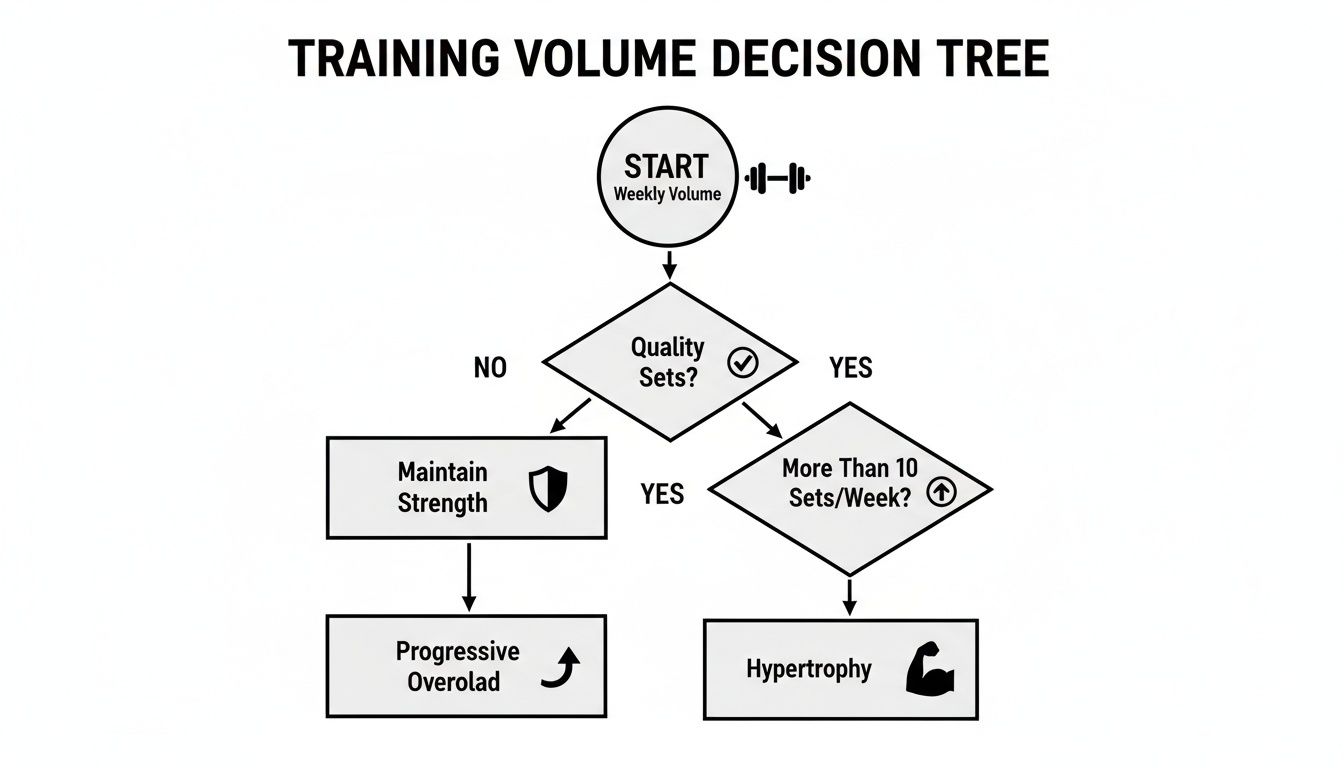
Ultimately, your training frequency is a tool. Its job is to serve the bigger goal of optimizing your volume and making sure your sets are good enough to actually cause muscle growth.
When More Isn't Always More Muscle
The leap from training a muscle just once a week to twice a week is a genuine game-changer for building muscle. So, what happens if you push it even further? The old-school gym mentality screams that more is always better, so hitting a muscle three, four, or even five times a week must be the secret to god-tier gains, right?
Not so fast. The science tells a much different story. Once you’re already stimulating a muscle at least twice per week, the benefits of adding even more frequency start to shrink—fast. This is the classic principle of diminishing returns playing out right in the squat rack.
Hitting the Point of Diminishing Returns
Think of it like watering a plant. Going from a sprinkle of water once a month to a good soak twice a week will make it flourish. But trying to water it every single day won't make it grow seven times faster. In fact, you'll probably just drown it. Muscle growth works along a very similar curve.
A massive analysis from Stronger by Science dug into a huge collection of hypertrophy studies and confirmed this. They found that while cranking up the training frequency was technically linked to a bit more growth, the overall effect was surprisingly small when the total weekly volume was matched.
This is incredible news. It gives you the freedom to choose a schedule that actually fits your life, rather than chaining you to the gym in pursuit of tiny gains that come at a huge cost to your time and recovery.
For most people, the real-world difference in muscle growth between hitting a muscle group twice a week versus three or more times is often trivial, as long as the total weekly volume is the same.
In other words, you don't need to live in the gym to get the best results. A well-structured upper/lower split that hits everything twice a week is more than enough for the vast majority of us to make fantastic progress.
The One Big Exception to the Rule
So, is there ever a good reason to train a muscle more than twice a week? Absolutely. But it’s not about chasing those tiny extra percentage points of growth. It’s about keeping your workout quality high when your training volume starts getting serious.
Let's imagine your program calls for a hefty 16 sets for your back this week. You could try to cram all of that into one marathon workout. But let’s be honest—by the time you hit set 12, your form is probably getting sloppy, your energy is tanked, and those last few sets are what we call "junk volume." They’re just digging a deeper recovery hole without stimulating much growth.
This is where higher frequency becomes a strategic tool. By splitting those 16 sets into two focused 8-set workouts, you can attack every single set with maximum intensity and perfect technique. Here, a higher training frequency for hypertrophy isn't about the frequency itself; it's a way to manage fatigue and ensure every rep counts. It becomes a tool for quality control.
Letting Your Recovery Guide The Way
Any generic training plan, no matter how well-designed, has one big problem: it wasn't designed for you. All the scientific principles and popular workout splits can’t possibly account for the realities of your life—your stress levels, how well you slept last night, or what you ate for lunch. The best training frequency for hypertrophy isn't a static number you pull from a textbook; it's the maximum frequency you can consistently recover from.
This is where we graduate from educated guesswork to a truly personalized approach. It’s a step beyond simply "listening to your body," which can be a bit vague and unreliable. Instead, we can use modern tools to get clear, objective feedback on what your body is actually ready to do.
From Guesswork to Precision
Going by muscle soreness alone is an old-school method that often misses the mark. We've all had days where we felt fine but were actually under-recovered, and other days where we were a little sore but still smashed a great workout. Smart training technology cuts through that ambiguity. By tracking your workload, it can model the real-time recovery status of your muscles.
The real goal isn't just to train a muscle when the calendar says it's leg day. It's to train that muscle at the precise moment it’s biologically primed to respond and grow again. That’s how you make sure no opportunity for growth is wasted.
This turns recovery from a passive waiting game into an active, strategic part of your training. You can make intelligent, day-to-day adjustments, ensuring you’re always hitting that sweet spot of applying just the right amount of stress at exactly the right time.
Visualize Your Readiness to Train
This might sound complex, but apps like Built Workout have made it incredibly straightforward. As you log your workouts, the app crunches the numbers on your volume and intensity for each muscle group. It then visualizes this data for you in a simple muscle recovery heatmap.
You can see exactly what this looks like below. It’s an at-a-glance snapshot of your body's recovery status.
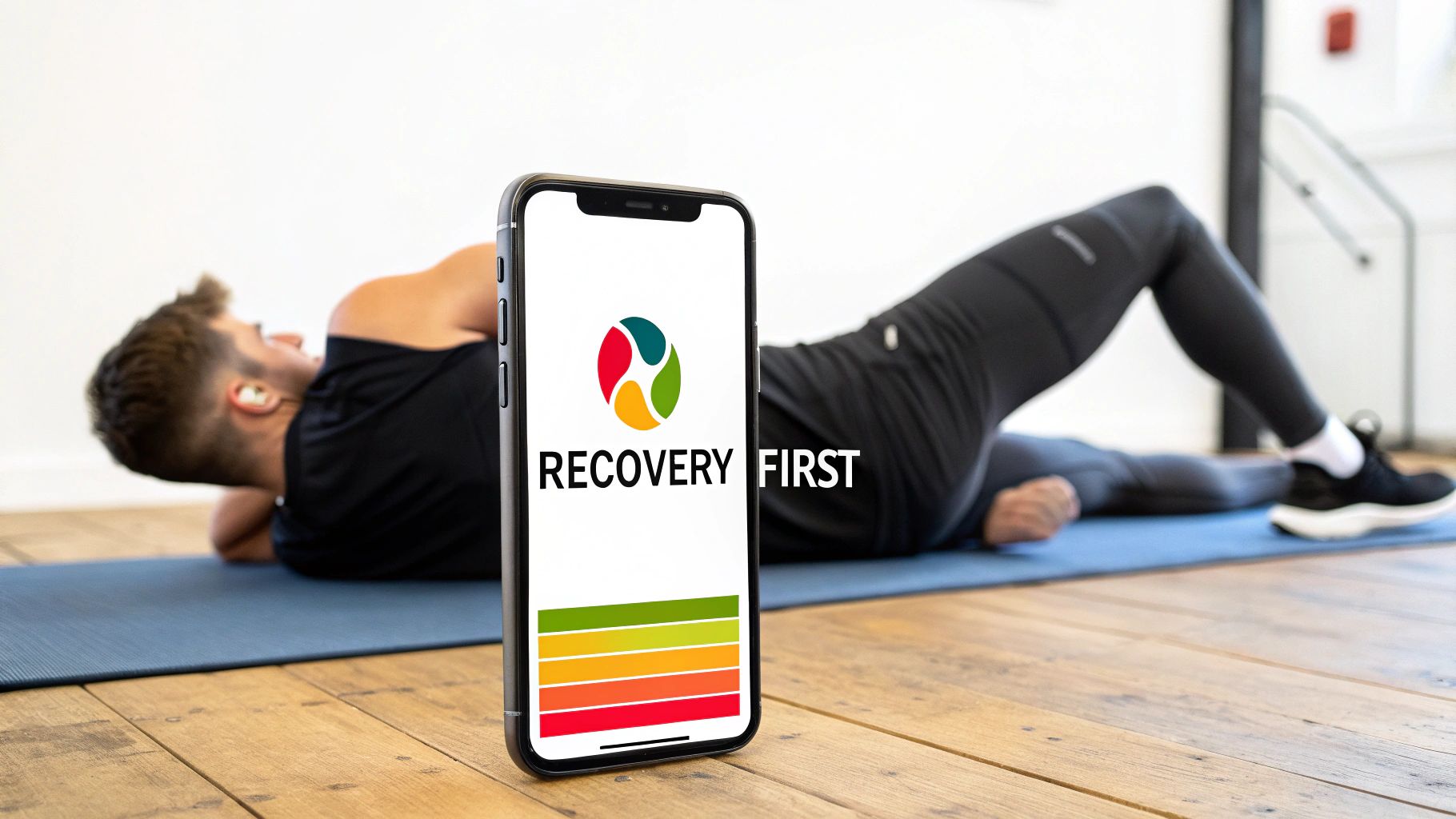
The color-coding makes it dead simple: green means a muscle is good to go, yellow means it's partially recovered, and red means it’s still fatigued. Based on this, the app’s AI can recommend the perfect workout for the day, guiding you to train a muscle group the moment it’s ready to build.
Building Your Smarter Training Blueprint
Alright, let's pull all these threads together and map out a practical plan. Building muscle isn't about finding one secret number; it's about understanding the core principles and then artfully applying them to your life and your body.
If there's one thing to burn into your brain, it's this: total weekly volume drives hypertrophy. Frequency isn't the end goal. Think of it as the tool you use to smartly organize that volume across your week—it’s how you make your training manageable, productive, and sustainable.
We’ve seen how hitting a muscle group 2-3 times per week is a fantastic starting point for beginners and a reliable sweet spot for most intermediate lifters. For the advanced crowd, higher frequencies aren't for chasing tiny gains, but a strategic way to handle the huge volumes needed for continued progress without every workout turning into a punishing marathon.
From Principles to Practice
At the end of the day, the best training frequency for hypertrophy is the one you can consistently recover from. This is where you graduate from following cookie-cutter programs and start building a system that’s truly your own.
The goal is to stop blindly following rigid dogma and start building a flexible, responsive, and highly effective training plan. Your body’s recovery data is the ultimate guide.
You now have the framework to structure your training week with real confidence. Listen to your body's feedback, whether that's just how you feel or the objective data you get from tools like the recovery heatmaps in the Built Workout app.
This approach—blending solid principles with your own real-world data—ensures you’re always training hard enough to grow but smart enough to recover. Stick with it, and the results will take care of themselves.
Frequently Asked Questions
Let's dig into some of the most common questions that pop up when people start thinking seriously about their training frequency. Here are some straightforward answers to help you put these ideas into practice.
What’s The Best Split If I Can Only Train Three Times Per Week?
If you’ve only got three days a week to train, a full-body routine is almost always your best bet for building muscle. Why? Because it lets you hit every major muscle group three times a week, which is a fantastic frequency for growth.
Think about it this way: a classic "bro split" where you train chest on Monday, back on Wednesday, and so on, only stimulates each muscle once. The science is pretty clear that hitting muscles at least twice per week delivers better results. A three-day full-body plan gets you that optimal frequency and spreads the work out, so no single workout has to be a marathon session.
Should I Train Small And Large Muscle Groups Differently?
Yes, absolutely. While the fundamental rules of training volume and recovery apply to everything, how you manage them can differ between muscle groups.
Big muscle groups—think legs and back—can handle a ton of work, but they also create a lot of overall fatigue that can wipe you out. For that reason, it’s usually a good idea to split up the volume for these big movers across at least two sessions per week.
On the other hand, smaller muscles like your biceps, triceps, and calves bounce back much quicker. You can get away with training them more often, tacking on a few sets here and there throughout the week. Adding a few quick sets for arms or calves at the end of several workouts is a great way to rack up volume without wrecking your recovery.
The real trick is matching your training frequency for hypertrophy to how fast a muscle can recover. Big muscles need more time off between heavy beatings; smaller ones are ready to go again sooner.
How Can I Tell If My Training Frequency Is Too High?
Your body will give you some pretty clear signals. The most obvious sign is that you just never feel recovered. You’re constantly sore, your performance in the gym is stalling or even going backward, and you’re just feeling run-down and tired all the time.
Poor sleep and a lack of motivation to even get to the gym are also huge red flags. But if you want to move beyond just "feel," objective data is the way to go.
This is where recovery tracking tools really shine. For instance, the heatmaps in the Built app can literally show you if a muscle group is still fried from your last session. If your chest is still showing up red or yellow on chest day, that’s a rock-solid sign you’re pushing the frequency too hard for your current recovery ability.
Ready to stop guessing and start training based on your body's real-time data? Download Built Workout today and let our recovery heatmaps and AI coach guide your path to smarter, more effective muscle growth. Get the app now.