
That initial spark of motivation to hit the gym is powerful, but it's also fleeting. When the novelty wears off and progress feels slow, even the most dedicated lifter can struggle to stay consistent. The problem often isn't a lack of willpower; it’s a flawed strategy. Relying on vague goals, guesswork-based training, and a lack of tangible feedback creates a cycle of burnout and frustration that can derail even the best intentions.
True, lasting motivation isn't about hype or temporary enthusiasm. It's about building an intelligent, data-driven system that provides constant reinforcement and makes progress undeniable. This guide cuts through the generic advice to deliver actionable, evidence-backed gym motivation tips, each designed to create a powerful feedback loop for your training. We'll explore how to leverage precise metrics, visualize recovery, and engage with a supportive community to build a motivational engine that runs on real results. Each tip is designed to be implemented today, transforming your approach from a chore into a compelling, data-rich journey toward your goals.
1. Track Your Progress with Data and Metrics
Relying on feelings alone is a fast track to demotivation. Instead, systematic tracking of workout data transforms abstract goals into concrete evidence of improvement. This data-driven approach provides powerful psychological reinforcement by making your gains tangible and undeniable. By logging sets, reps, and weight, you create a historical record that proves you’re getting stronger, even on days you don't feel like it.
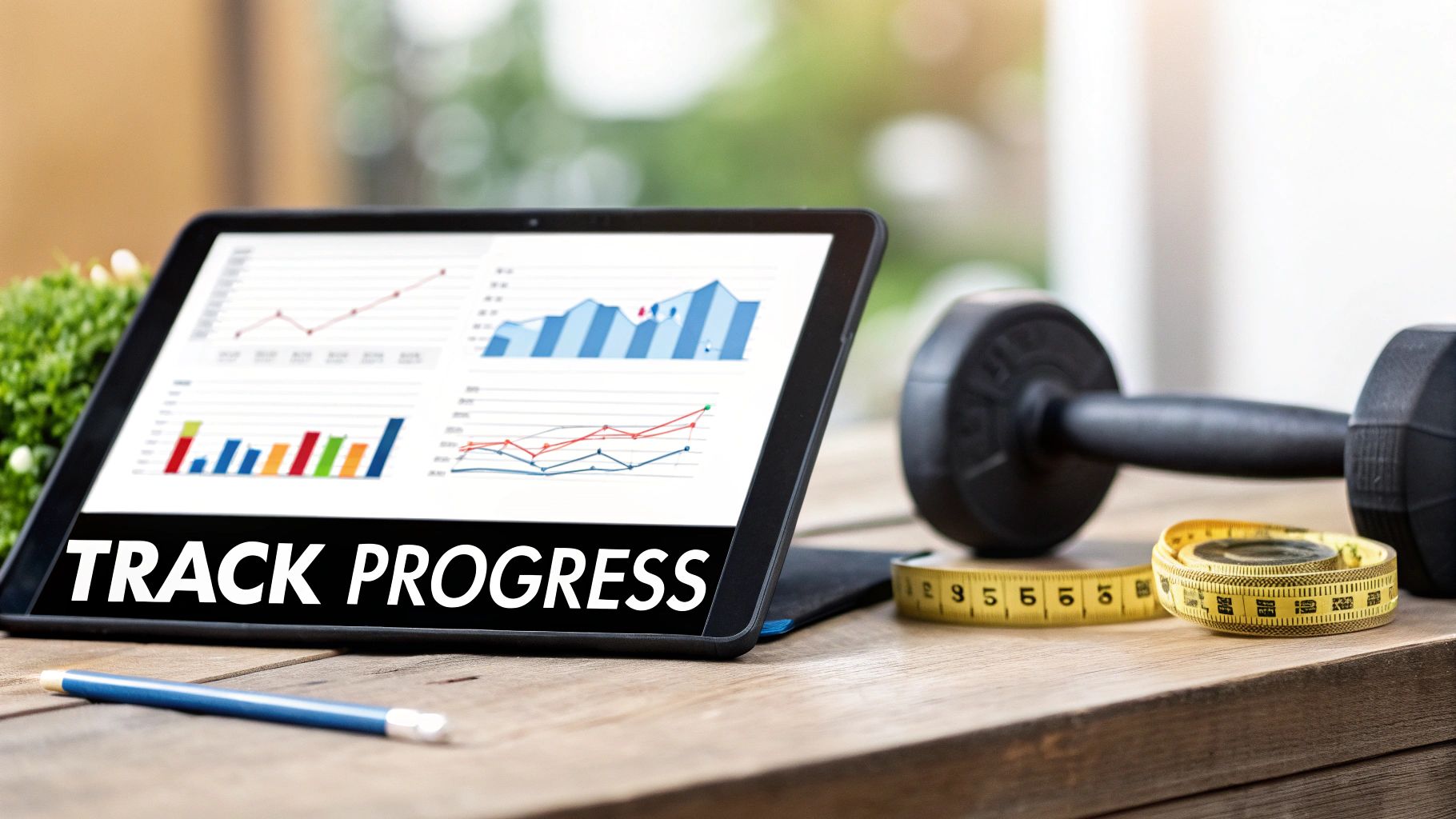
This method is one of the most effective gym motivation tips because it shifts your focus from subjective feelings to objective facts. Seeing your bench press increase by 10 pounds on a chart or watching your recovery heatmap improve provides a clear, visual reward for your hard work.
How to Implement It
- Log Immediately: Record every set right after you complete it for maximum accuracy. Don't wait until the end of your workout.
- Review Weekly: Dedicate time each week to look at your progress charts. Celebrate small wins, like an extra rep or a slight weight increase.
- Focus on Trends: Compare your metrics month-to-month rather than session-to-session. This helps you see the bigger picture and avoid discouragement from a single off day.
Built's detailed analytics and progress visualization tools are designed to support this process. You can map every exercise to specific muscle groups and see your strength gains over time. Explore how our platform turns your workout data into a powerful motivational tool by checking out a demo of Built's features.
2. Use Recovery Visualization to Train Smarter
Training based on how you feel is often misleading, leading to overtraining or undertraining. Instead, using recovery visualization provides an objective, data-driven look at your body's readiness. Color-coded anatomical heatmaps show the real-time recovery status of individual muscle groups, removing the guesswork from training decisions. This visual clarity reduces decision fatigue and helps prevent overtraining, a major source of demotivation for dedicated lifters.
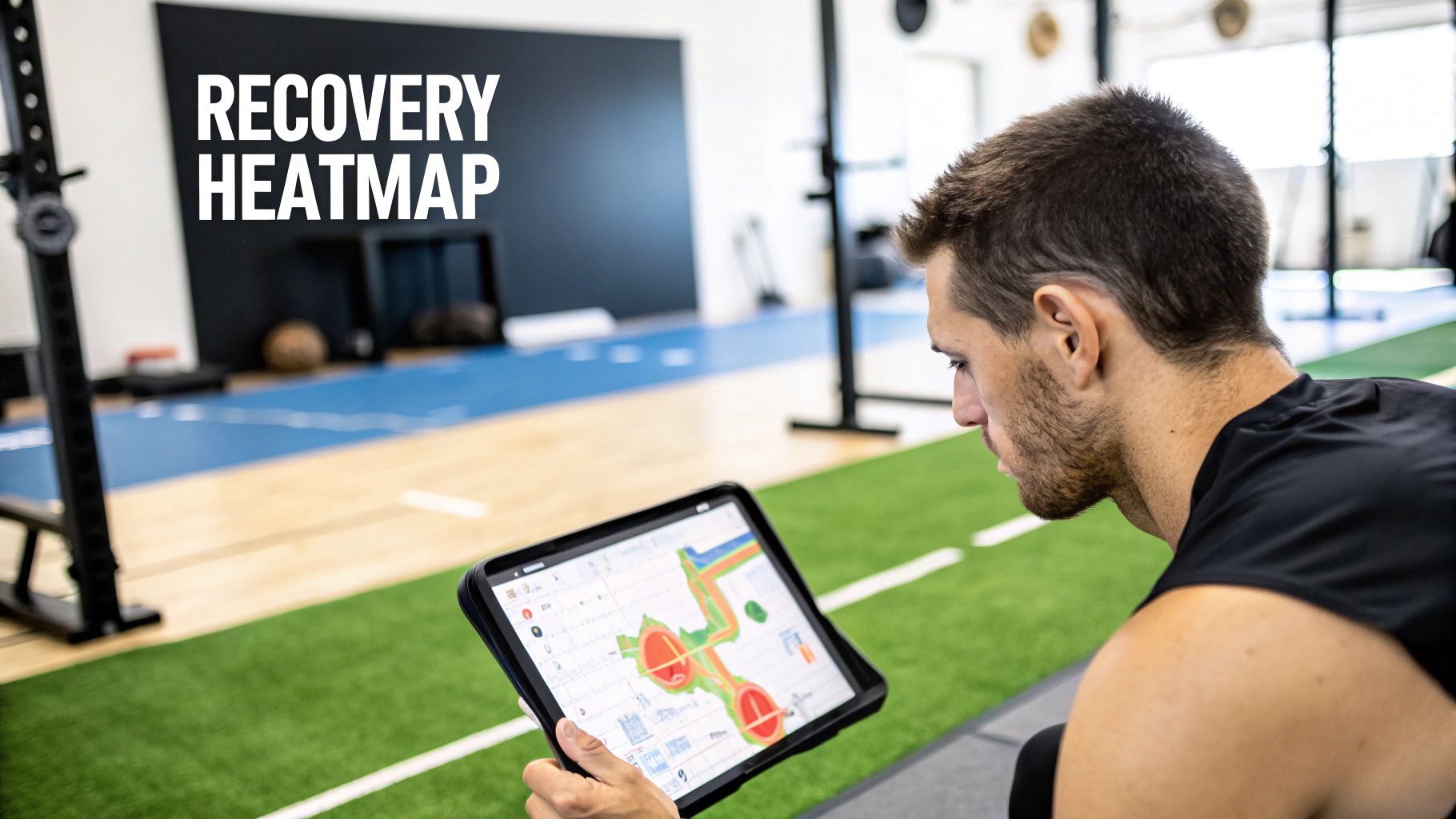
This method is one of the most powerful gym motivation tips because it builds confidence and optimizes your schedule. For instance, seeing that your chest muscles are fully recovered allows you to train them again sooner than planned, accelerating progress. This feedback loop makes training smarter, safer, and more effective, ensuring every session contributes maximally to your goals without risking burnout.
How to Implement It
- Check Before Every Session: Review your recovery heatmap before your workout to guide exercise selection and adjust volume based on which muscles are primed to perform.
- Test Volume Increases Safely: Only add sets or reps for muscle groups showing a 'ready' or 'recovered' status. This prevents overreaching on fatigued areas.
- Optimize Your Split: Use recovery data to redesign your training split. If your back recovers faster than your legs, you can increase its training frequency for better results.
Built’s proprietary recovery heatmap technology translates your workout data into a simple, color-coded visual guide. It shows you exactly what’s ready for more work and what needs rest, empowering you to make smarter training choices. See how this feature can transform your approach to recovery by learning more about Built.
3. Set Clear, Measurable Goals and Mini-Milestones
Vague goals like "get stronger" or "get in shape" are motivation killers because they lack a finish line. Instead, setting specific, measurable targets transforms your fitness journey into a series of achievable quests. This approach, rooted in goal-setting theory, provides clarity and turns abstract desires into concrete benchmarks like "squat 315 lbs for a 3x5" or "add 5 reps to my top set of incline press."

This is one of the most powerful gym motivation tips because it creates a constant feedback loop of success. Breaking a large goal into smaller mini-milestones provides regular wins that reinforce your training habits and build unstoppable momentum. Celebrating hitting a new rep PR or a specific volume target feels far more rewarding than waiting months for a distant, undefined outcome.
How to Implement It
- Define Macro and Micro Goals: Set a primary goal for the next 3 months (e.g., add 20 lbs to your bench press). Then, create bi-weekly micro-targets, such as adding 2.5 lbs or one extra rep to a specific set.
- Be Exercise-Specific: Tie your goals directly to performance on key lifts. Instead of "grow my chest," aim for "increase dumbbell bench press from 80s to 90s for 8 reps."
- Celebrate Every Milestone: Acknowledge when you hit a micro-goal. This consistent reinforcement is crucial for long-term adherence and makes the process more enjoyable.
- Adjust Based on Data: Use recovery data to inform your goals. If your readiness is consistently low, it's smarter to adjust a target than to push through and risk injury.
Built makes this process seamless by allowing you to set specific performance goals for any exercise. Our analytics help you identify realistic progression targets based on your history and recovery capacity, ensuring your goals are both ambitious and attainable. You can even share your milestones on the social feed for extra accountability.
4. Build Social Accountability and Community Engagement
Training alongside others, even virtually, is a powerful tool for consistency. Knowing your workout data is visible to selected peers creates psychological accountability, increasing the likelihood you'll show up and perform at high intensity. Social feeds that display actual exercise selection and performance metrics provide practical inspiration and normalize the daily grind of training.
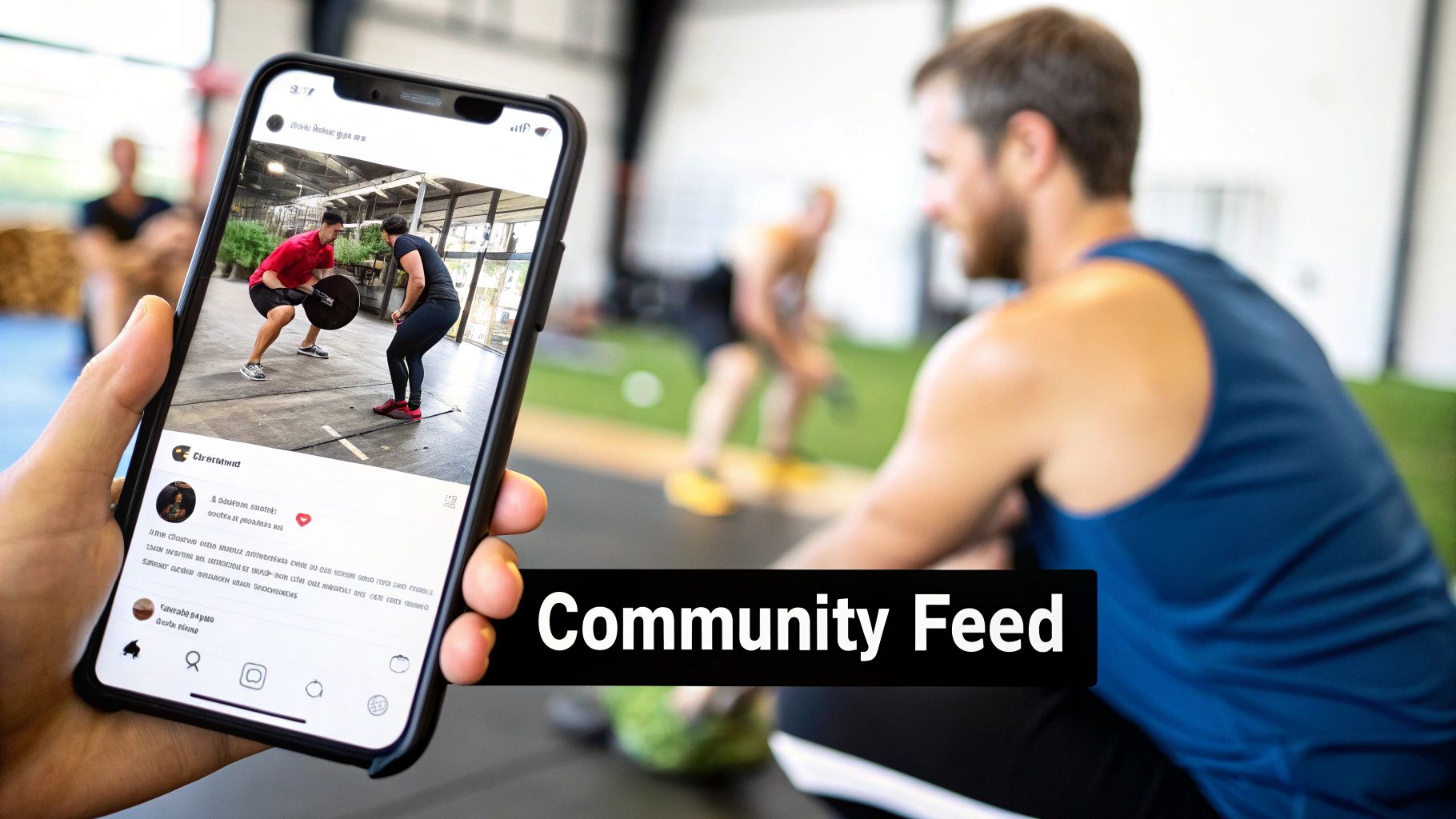
This method is one of the most effective gym motivation tips because it leverages our inherent need for connection and social validation. Seeing a friend hit a new personal record or watching a respected athlete complete a tough workout provides a tangible spark of motivation. It transforms a solitary activity into a shared journey, creating healthy competition and valuable learning opportunities.
How to Implement It
- Follow Strategically: Curate your feed by following 3-5 athletes or friends with similar training goals. Focus on learning from their real exercise selection and volume patterns, not just highlight reels.
- Engage Meaningfully: Instead of generic likes, leave specific, encouraging comments on your peers' workouts. Acknowledging their hard work strengthens the community bond.
- Share Transparently: Be honest with your own data. Sharing your workouts selectively with training partners or a coach builds credibility and invites genuine support, fostering true accountability.
Built’s social feed is designed for exactly this purpose, allowing you to share workouts and see what your network is doing in real-time. You can analyze their routines for new ideas and use the community to stay accountable. See how our integrated community features can enhance your training journey by exploring a demo of Built's platform.
5. Get AI-Guided Form Cues and Real-Time Technique Feedback
Nothing kills motivation faster than an injury or a plateau caused by poor form. AI-guided coaching transforms technique from a frustrating obstacle into an engaging skill. By providing real-time feedback, it helps you understand proper movement patterns, preventing compensation and building confidence with every lift. This turns the tedious process of mastering form into a source of continuous improvement and keeps your training exciting.
This approach is one of the most powerful gym motivation tips because it directly impacts your results and safety. Instead of guessing if your squat depth is correct or your back is straight, you get instant, objective cues. This accelerates your learning curve, leading to faster strength gains and a reduced risk of injury, which keeps you consistently in the gym and moving toward your goals.
How to Implement It
- Set Up for a Clear View: Position your phone with a clear side or front angle before your set to ensure the AI can accurately analyze your movement.
- Focus on One Cue: Concentrate on improving one specific aspect of your form per session, like knee tracking on squats, to avoid feeling overwhelmed.
- Review and Learn: Use AI feedback as a tool to build your own movement intuition. Review recorded sessions later to spot patterns you might have missed in the moment.
Built’s AI-powered features offer real-time form correction to ensure every rep is safe and effective. It provides the guidance of a personal trainer right in your pocket. Learn more about how an AI-powered workout app can revolutionize your technique and motivation.
6. Embrace Periodization and Planned Variety
Repeating the same workout indefinitely is a direct path to both physical plateaus and mental burnout. Periodization, the strategic variation of training intensity, volume, and exercise selection over planned cycles, prevents this stagnation. This structured approach keeps your workouts mentally engaging and physically challenging, ensuring you continue to make progress long-term.
This method is one of the most powerful gym motivation tips for advanced lifters because it creates a clear roadmap for progress. Instead of aimlessly switching exercises, planned variety ensures every training block builds upon the last, moving you closer to your specific strength or hypertrophy goals. It provides a sense of direction and purpose, turning each phase into a new, exciting challenge.
How to Implement It
- Plan in Blocks: Structure your training into 4-6 week phases, each with a distinct focus like hypertrophy (8-12 reps), strength (3-6 reps), or endurance. This prevents adaptation and keeps your body responsive to new stimuli.
- Schedule Deloads: Integrate a deload week every 4-6 weeks, reducing volume and intensity to 50-60%. This allows for full recovery, consolidates gains, and prepares you to come back stronger for the next block.
- Rotate Exercises: Swap out secondary or accessory exercises at the end of each training block. This introduces novel movements to target muscles from different angles and prevents mental fatigue from doing the same routine.
With Built, you can create and schedule distinct training blocks, tracking volume and intensity across each phase to ensure your periodization is on point. For a deeper understanding of how to structure these phases, explore our guide on training frequency for hypertrophy.
7. Create a Consistent Pre-Workout Ritual and Routine
The biggest hurdles to hitting the gym are often mental, not physical. A consistent pre-workout ritual acts as a powerful psychological trigger, signaling to your brain and body that it’s time to perform. This predictable sequence of actions reduces decision fatigue, minimizes the friction of getting started, and builds an automatic link between the routine and a state of focus.
This approach is one of the most practical gym motivation tips because it leverages the power of habit, as popularized by authors like James Clear. Over time, the ritual itself becomes a source of motivation. The simple act of starting your routine can automatically elevate your mental state and build momentum, making it far easier to get through the gym doors, especially on low-energy days.
How to Implement It
- Design a 15-30 Minute Sequence: Create a short, repeatable routine. For example: have a pre-workout snack, review your workout plan on your phone during the drive, and then start a specific warm-up playlist as you walk into the gym.
- Include Mental and Physical Elements: Your ritual should address both. Combine a physical action like a dynamic warm-up with a mental one, such as visualizing your key lifts for the day or reviewing form cues.
- Be Inflexible with Consistency: The key is repetition. Follow your ritual precisely every time you train, particularly on days when your motivation is lowest. This reinforces the neurological connection and makes the process automatic.
You can use the Built app to supercharge this process. Set a notification to remind you to start your pre-workout ritual. Before you leave for the gym, open the app to review your planned workout and check your recovery status, ensuring your mind and body are primed for the session ahead.
8. Progressive Overload with Intelligent Volume Management
True motivation comes from seeing real, sustained progress. Progressive overload, the principle of systematically increasing training demands, is the engine of that progress. However, simply adding more weight or reps without considering your body's recovery capacity can lead to burnout, plateaus, and injury. Intelligent volume management ensures your progression is both challenging and sustainable.
This data-informed approach is one of the most powerful gym motivation tips because it creates a repeatable cycle of success. By aligning your effort with your recovery state, you can consistently achieve small, measurable wins. Seeing your total volume trend upward on a chart provides concrete proof that your hard work is paying off, keeping you engaged and driven.
How to Implement It
- Use Double Progression: Focus on increasing your reps within a target range (e.g., 8-12 reps) first. Once you hit the top of the range for all sets, increase the weight slightly and start back at the bottom of the rep range.
- Track Total Volume: Monitor your volume (sets x reps x weight) for each muscle group. This provides a more accurate picture of your training stress than just looking at the weight on the bar.
- Let Recovery Guide Volume: Use your recovery data to make informed decisions. If a muscle group is fully recovered, consider adding an extra set to safely push your limits. If it’s still fatigued, stick to your planned volume or slightly reduce it.
Built’s recovery heatmaps and volume tracking tools are perfect for this. Our platform visualizes which muscles are ready for more work and which need rest, allowing you to apply progressive overload intelligently. See how Built can guide your progress by exploring a demo of our features.
9. Find Your 'Why' and Connect Training to Personal Identity
External motivators like looking good or hitting a certain number on the scale can provide a powerful initial push, but they often fade. True, lasting motivation comes from within by connecting your training to your core identity. When hitting the gym becomes part of who you are instead of just something you have to do, the need for daily motivation shrinks. This identity-based drive is resilient and sustains effort through life’s inevitable challenges.
This approach is one of the most sustainable gym motivation tips because it anchors your actions to a deeper purpose. Instead of chasing a fleeting outcome, you are reinforcing the type of person you want to be with every session. A parent training to model a healthy lifestyle for their kids isn't just lifting weights; they are investing in their family's future. A professional building resilience in the gym is developing character that translates directly to their career.
How to Implement It
- Define Your 'Why': Write down the deeper, identity-level reason you train. Is it to embody discipline, reclaim an athletic past, or build mental fortitude? Keep this reason visible.
- Frame Your Actions: Instead of saying, "I have to go to the gym," reframe it as, "I'm going to the gym because I am the kind of person who prioritizes my health and strength."
- Celebrate Identity Wins: Acknowledge and reward yourself for non-metric victories that align with your identity, such as showing up on a tough day or choosing a workout over a less healthy option.
Built’s community features allow you to connect with others who share a similar training identity or 'why'. Sharing this deeper purpose with a supportive group reinforces your commitment and turns a solo journey into a shared mission.
10. Active Recovery and Reframing Plateaus
Viewing rest days as passive downtime is a common mistake that sabotages progress and kills motivation. Instead, treating recovery as an active, trainable variable prevents burnout and reframes plateaus as necessary adaptation phases. Active recovery strategies, such as mobility work and low-intensity movement, accelerate your body's ability to repair and adapt, keeping you consistently ready to perform. This strategic approach helps you break through frustrating stalls.
This method is one of the most powerful gym motivation tips because it teaches you to see the bigger picture. Progress isn't always linear; weeks of apparent stagnation often precede a major breakthrough. By focusing on recovery metrics and non-linear gains (like better form or more reps at the same weight), you learn to value the entire process, not just a rising one-rep max.
How to Implement It
- Schedule Active Recovery: On rest days, perform 20-30 minutes of light activity like walking, stretching, or foam rolling. Focus on the muscle groups that your recovery heatmap shows are most fatigued.
- Prioritize Sleep: Aim for 7-9 hours of quality sleep per night. This is the single most effective recovery tool and has a direct impact on your motivation and performance.
- Reframe Stalled Lifts: If your primary lift has stalled for two weeks, look for other signs of progress. Did your total volume increase? Did your reps go up at a submaximal weight? Celebrate these "hidden" wins as real progress.
Built’s recovery heatmap is the perfect tool for guiding your active recovery efforts. It shows you precisely which muscles are ready for stress and which need attention, allowing you to tailor your rest days for optimal adaptation. Explore a demo of Built's features to see how data-driven recovery can keep you motivated and injury-free.
10-Point Gym Motivation Comparison
| Approach | Implementation Complexity 🔄 | Resource Requirements ⚡ | Expected Outcomes 📊/⭐ | Ideal Use Cases 💡 | Key Advantages ⭐/📊 |
|---|---|---|---|---|---|
| Track Your Progress with Data and Metrics | Medium — requires consistent logging and dashboard setup 🔄 | Low–Medium — time to log; app access; minimal hardware ⚡ | High — objective trends, clear evidence of progress ⭐📊 | Lifters and coaches who want measurable improvements and accountability 💡 | Objective evidence, personalized analytics, momentum from visible gains ⭐ |
| Use Recovery Visualization to Train Smarter | Medium — needs historical data and algorithm tuning 🔄 | Medium — frequent logging and app with heatmaps ⚡ | High — reduced overtraining, optimized frequency and safer load ⭐📊 | Athletes managing volume/frequency and people returning from injury 💡 | Prevents overtraining; clear visual decisions on when to push or rest 📊 |
| Set Clear, Measurable Goals and Mini-Milestones | Low–Medium — goal framing and periodic review 🔄 | Low — planning time, notifications, simple tracking ⚡ | High — frequent wins, sustained motivation and clearer progress ⭐📊 | Beginners and goal-focused trainees needing structure and milestones 💡 | Clarity of purpose, regular reinforcement, easy communication to coaches ⭐ |
| Build Social Accountability and Community Engagement | Low — enable feed and privacy settings; engage regularly 🔄 | Medium — time investment to follow/participate; social features ⚡ | Moderate–High — improved adherence and practical inspiration ⭐📊 | People motivated by peers, remote trainers, and community-driven athletes 💡 | Increased adherence, peer learning, healthy competition without judgment 📊 |
| Get AI-Guided Form Cues and Real-Time Technique Feedback | High — camera setup, model tuning, contextual interpretation 🔄 | High — clear video angles, device/computation, app integration ⚡ | High — fewer injuries, faster technical gains, better transfer to strength ⭐📊 | Novices learning technique, rehabbing athletes, coaches seeking objective cues 💡 | Real-time corrective feedback, biomechanical explanations, faster skill acquisition ⭐ |
| Embrace Periodization and Planned Variety | High — requires phase planning and monitoring 🔄 | Medium — programming knowledge or AI assistance; tracking tools ⚡ | High — prevents plateaus, maintains long-term progress and freshness ⭐📊 | Intermediate/advanced athletes and anyone training for long-term adaptation 💡 | Structured variation, planned deloads, coordinated stimulus for goals 📊 |
| Create a Consistent Pre-Workout Ritual and Routine | Low — habit design and routine consistency 🔄 | Low — time block (15–30 min), prompts/playlist integration ⚡ | Moderate — improved consistency, reduced start friction, better focus ⭐📊 | People who struggle to start sessions or need reliable mental priming 💡 | Low-effort boost to consistency, automatic cueing of intensity and focus ⭐ |
| Progressive Overload with Intelligent Volume Management | Medium–High — manages multiple variables and timing 🔄 | Medium — tracking volume/intensity and recovery data ⚡ | High — steady, measurable strength/size gains with less burnout ⭐📊 | Strength athletes and disciplined trainees prioritizing steady progression 💡 | Data-informed progression, reduced overreach, predictable long-term gains ⭐ |
| Find Your 'Why' and Connect Training to Personal Identity | Medium — reflection, journaling, social alignment 🔄 | Low — time for reflection and community connection ⚡ | High — durable intrinsic motivation and resilience through setbacks ⭐📊 | Long-term adherents, behavior-change seekers, those needing deeper purpose 💡 | Stable motivation, identity-based habit persistence, resistance to comparison ⭐ |
| Active Recovery and Reframing Plateaus | Medium — planned recovery modalities and monitoring 🔄 | Medium — time for mobility, sleep prioritization, sometimes tools ⚡ | High — faster adaptation, fewer injuries, better long-term consistency ⭐📊 | Trainees facing stagnation, high-frequency programs, those prone to burnout 💡 | Shorter recovery times, reframed progress metrics, reduced burnout/injury risk 📊 |
From Motivation to Momentum: Your Action Plan
The journey to consistent gym performance isn't about finding a secret source of infinite willpower. Instead, it’s about strategically engineering an environment where motivation becomes the natural outcome of your actions. Throughout this guide, we've explored a collection of powerful, data-driven gym motivation tips designed to shift your focus from fleeting feelings to sustainable systems. You’ve learned that motivation isn't a passive state; it is actively built through deliberate habits and intelligent tools.
We moved beyond generic advice, showing you how to translate abstract concepts into concrete actions. From leveraging the granular data of every tracked lift to visualizing your recovery status, each strategy empowers you to make smarter, more informed decisions. These aren't just tricks to get you through one tough day; they are foundational principles for long-term athletic development. The core lesson is this: when you replace ambiguity with clarity and guesswork with data, momentum becomes inevitable.
Your Path from Information to Implementation
Reading these tips is the first step, but true transformation happens when you put them into practice. Don't feel pressured to implement all ten strategies at once. The goal is progress, not perfection. Start by choosing just one or two tactics that resonate with you the most and commit to integrating them into your routine for the next two weeks.
Here is a simple action plan to get you started:
- For the Data-Driven Athlete: If you thrive on numbers, your first step is to commit to tracking every single set, rep, and weight using a tool like Built. Focus on the principle of Progressive Overload with Intelligent Volume Management. Your goal is to see those numbers trend upward over time, providing undeniable proof of your hard work.
- For the Athlete Feeling Burnt Out: If fatigue is your biggest hurdle, prioritize Recovery Visualization and Active Recovery. Before your next session, check your muscle recovery status. Let that data guide your decision to either push hard or focus on a lighter, restorative workout. This data-driven approach to rest is one of the most effective gym motivation tips for preventing plateaus.
- For the Socially-Driven Lifter: If community fuels you, lean into Social Accountability. Share a specific, measurable goal with a friend or training partner this week. Use Built's social features to follow their progress and let them follow yours. This shared journey transforms a solo grind into a collective mission.
Building a Resilient Fitness Identity
Ultimately, the most profound shift occurs when your actions align with your identity. By consistently showing up, tracking your progress, celebrating small wins, and connecting with a community, you are not just "going to the gym." You are actively becoming a stronger, more disciplined, and more resilient version of yourself. Each logged workout is a vote for that identity. Each recovery day is an investment in your long-term capability.
This is how you move past the cycle of starting and stopping. You create a reinforcing loop where action generates data, data provides insight, insight informs your next action, and the resulting progress fuels your desire to continue. Your motivation is no longer a fragile feeling subject to daily moods; it becomes a robust engine built on a foundation of tangible achievements and intelligent planning. You have the blueprint; now it's time to build.
Ready to transform these gym motivation tips from ideas into action? Built Workout is the all-in-one platform designed to help you track progress, manage recovery, and connect with a community of lifters. Stop guessing and start building momentum with intelligent, data-driven tools by downloading the app at Built Workout today.