Finding the right iOS app to guide your fitness journey can transform your training, turning abstract goals into structured, measurable progress. The App Store is saturated with options, making it difficult to distinguish between generic workout logs and powerful, data-driven training partners. This guide cuts through the noise to provide a detailed, comparative analysis of the best fitness apps for iOS, specifically for gym-goers, strength athletes, and anyone serious about optimizing their workout programming and recovery.
We move beyond surface-level descriptions to offer an in-depth look at what makes each app stand out. You will discover which platforms excel at AI-guided programming, how some provide unparalleled fatigue management insights, and which are best suited for personal trainers managing client progress. Our analysis focuses on practical application, helping you understand how specific features translate to real-world results in the weight room. Whether you need an app that provides hyper-detailed analytics, offers form correction tips, or simply makes logging your sets and reps seamless, this list has a solution.
Beyond specific workouts, many of the best fitness apps for iOS also serve as a comprehensive wellness tracker, helping users monitor various aspects of their overall health and progress. Throughout this article, each profile includes direct links, key feature breakdowns, honest pros and cons, and clear "best-for" recommendations. This structured approach is designed to help you confidently select the ideal app that aligns with your specific strength-training goals, experience level, and tracking preferences, ensuring you invest your time and effort in a tool that truly enhances your performance.
1. Built Workout
Built Workout secures its top spot as one of the best fitness apps for iOS by moving beyond simple workout logging. It offers a sophisticated, data-driven ecosystem for strength training that combines meticulous tracking with intelligent, recovery-aware coaching. The platform is engineered for lifters who understand that progress isn't just about the work you do in the gym, but also how your body recovers from it. Its standout feature is the intuitive, real-time muscle recovery visualization.
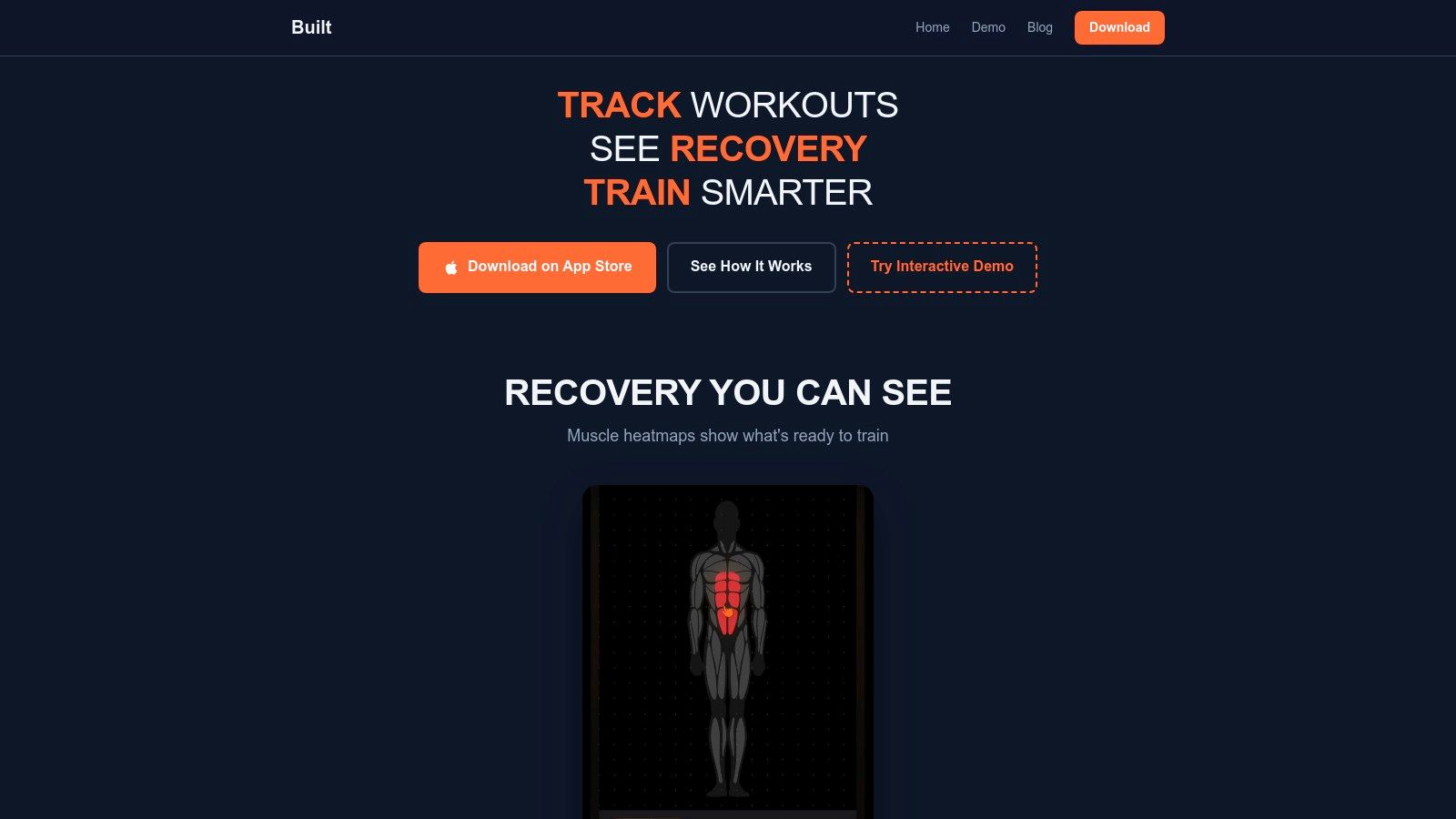
This app translates every set, rep, and weight into actionable data, mapping the load to specific muscle groups. The result is a color-coded anatomical heatmap that shows you precisely which muscles are fatigued (red/orange) and which are fully recovered (gray). This eliminates guesswork from your training schedule, helping you prevent overtraining and optimize your sessions for maximum impact.
Key Strengths and Use Cases
Built's AI coach is another powerful differentiator. It uses your personal recovery scores to adapt your training plan on the fly. If your chest is still fatigued from a previous session, the AI might suggest reducing volume or substituting exercises. Crucially, it explains the rationale behind its recommendations, helping you build a deeper understanding of training principles.
The app also fosters a unique learning environment with its social feed, which functions like "Strava for the gym." You can see the complete workouts of friends and influencers, including exercises, weights, and their resulting recovery patterns. This provides a transparent look into effective training methodologies, moving beyond generic advice to show you what actually works for others.
Platform Details
- Best For: Strength athletes, bodybuilders, and data-focused gym-goers who want to optimize training volume and recovery. Also excellent for personal trainers managing client progress.
- Pricing: The app is free to download with core tracking and social features. A premium subscription is required to unlock real-time recovery tracking, advanced AI coaching, and deeper analytics.
- Availability: Currently exclusive to iOS (iPhone and iPad).
- Website: https://www.builtworkout.com
Pros:
- Actionable Recovery Data: Muscle-specific heatmaps provide clear, at-a-glance guidance on which body parts are ready to train.
- Adaptive AI Coaching: The AI adjusts programming based on your real-time recovery status and explains its logic.
- Community Learning: The social feed exposes real-world training data from other users, offering practical insights.
- Granular Tracking: Maps workout load to individual muscles for more precise and meaningful analytics.
Cons:
- iOS Exclusive: The lack of an Android version limits its user base.
- Premium Features Paywalled: The most powerful features, like real-time recovery and AI coaching, require a subscription.
- Dependent on User Input: The accuracy of recovery data relies on the user diligently and correctly logging all workout variables.
2. Apple App Store – Health & Fitness
The App Store isn't a fitness app itself, but it's the essential starting point and discovery engine for every iPhone user looking for the best fitness apps for iOS. It’s the central, secure hub where you’ll find, evaluate, and download every other app on this list. Apple’s platform excels at curation, making it more than just a massive directory.
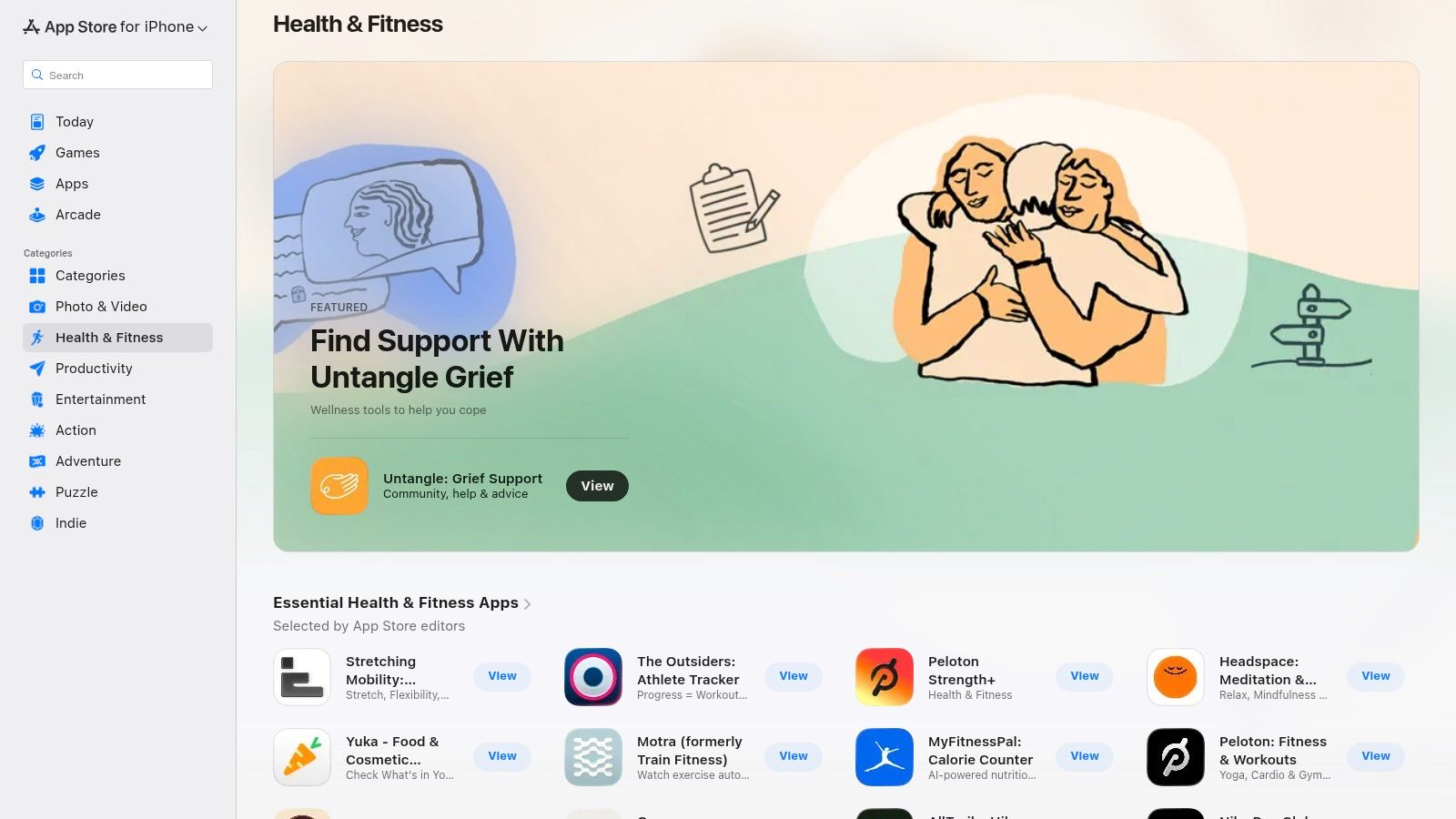
Its editorial collections, like "Apps for the Gym" or "Track Your Run," group top-tier apps by specific goals, saving you from aimless searching. User reviews and ratings provide crucial social proof, while detailed App Privacy labels offer transparency into how your health data is handled.
Key Platform Features
The App Store provides a trusted ecosystem for managing your fitness app journey. Everything from initial download to subscription management is handled directly through your Apple ID, simplifying the process.
- Curated Collections: Discover new and trending apps through themed stories and lists curated by Apple's editors.
- User Ratings & Reviews: Gain insights from the real-world experiences of other fitness enthusiasts before you download.
- Secure Transactions: All purchases and subscriptions are processed securely via Apple ID, often with Family Sharing options available.
- App Privacy Labels: Easily understand what data an app collects and how it's used, a critical factor for health-related applications.
The sheer volume of options can be overwhelming. To truly stand out, fitness app developers should focus on mastering the iOS App Store preview to effectively showcase their app's unique features and benefits.
Website: apps.apple.com/us/iphone/grouping/25188
3. Apple Fitness+
For users deeply embedded in the Apple ecosystem, Apple Fitness+ offers one of the most seamless and integrated workout experiences available. It’s a subscription service built directly into the Fitness app, delivering high-quality, studio-style classes across a wide range of modalities like HIIT, strength training, yoga, and Pilates. Its core strength lies in its flawless integration with the Apple Watch.
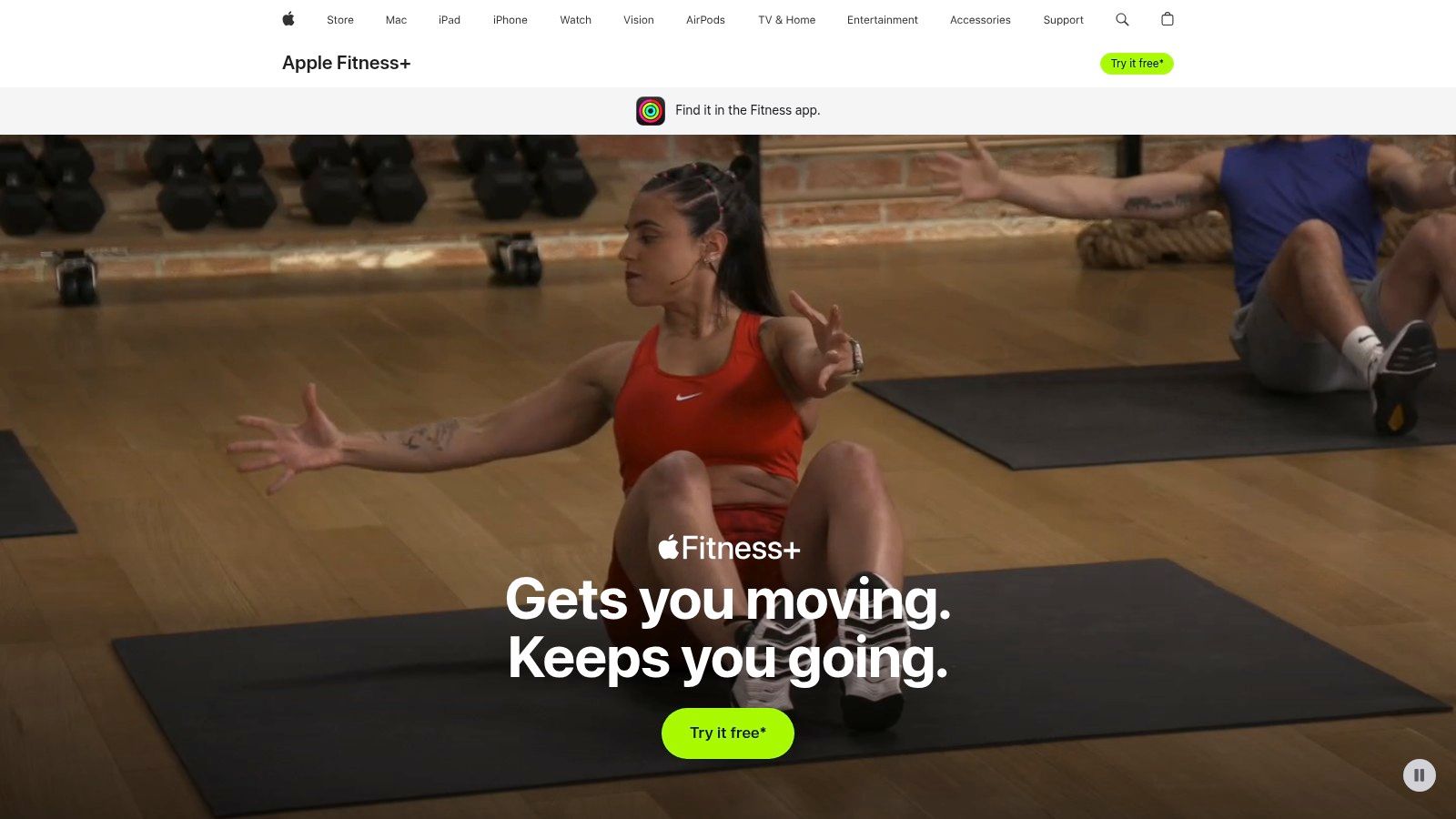
This synergy allows real-time metrics, such as your heart rate and calories burned, to be displayed directly on your iPhone, iPad, or Apple TV screen during a workout. The platform’s high production value, diverse trainers, and frequently updated library make it an engaging choice for those who value convenience and motivation, positioning it as one of the best fitness apps for iOS for guided content.
Key Platform Features
Apple Fitness+ transforms your Apple devices into a personal fitness studio, with curated programs and collections to guide you toward specific goals, whether it’s a marathon or a beginner's introduction to strength training. The experience is heavily enhanced by an Apple Watch, which unlocks its most compelling features.
- Real-Time Metrics: Live heart rate, activity rings, and a competitive "Burn Bar" are displayed on-screen when using an Apple Watch.
- Vast Workout Library: Access a large and constantly growing collection of on-demand classes across 12 different workout types, from 5 to 45 minutes.
- Guided Programs & Audio: Follow structured programs like "Get Ready for a 5K" or take your workout outdoors with audio-guided runs and walks.
- Apple Ecosystem Integration: Seamlessly works across Apple devices and can be bundled with other services in an Apple One Premier subscription.
The service truly shines for those who own an Apple Watch, as the experience is more limited without one. It requires a paid subscription, but its polish and hardware-software harmony are unmatched.
Website: www.apple.com/apple-fitness-plus/
4. Strava
Strava has become the go-to social network for athletes, particularly runners and cyclists, transforming solo activities into shared experiences. It stands out by making GPS tracking a competitive and communal event. The platform excels at fostering motivation through its iconic segments, where users compete for the best times on specific stretches of road or trail.
More than just a tracking app, Strava is a powerful tool for discovery. Its global heatmaps show popular routes anywhere in the world, and its route planner helps you create new adventures. The social feed, filled with kudos and comments, provides the encouragement needed to stay consistent. While it’s one of the best fitness apps for iOS for cardio enthusiasts, it also supports a wide range of other activities.
Key Platform Features
Strava’s strength lies in its blend of robust activity tracking and deep social integration. It connects seamlessly with hundreds of GPS devices, from Apple Watches to Garmin and Wahoo bike computers, making it a central hub for all your training data.
- GPS Tracking & Segments: Record your activities and compete on leaderboards for popular routes.
- Route & Heatmap Discovery: Plan new runs or rides using data from millions of users worldwide.
- Training Analytics: A premium subscription unlocks in-depth analysis of your performance, fitness, and fatigue.
- Community & Social Sharing: Join clubs, participate in challenges, and share your activities with a supportive community.
The competitive nature of Strava can be highly motivating, but it's important to listen to your body and avoid pushing too hard. Understanding the principles of recovery is key to sustainable progress, which is why it's wise to learn how to prevent overtraining as you chase new personal records.
Website: www.strava.com
5. Fitbod
Fitbod excels as a personalized strength-training planner, using an algorithm to generate workouts tailored to your specific goals, available equipment, and current recovery state. It’s designed for the gym-goer who wants to take the guesswork out of their routine, focusing on data-driven progression. The app intelligently adapts your next session based on previously logged sets, reps, and weights, ensuring you are consistently challenged.
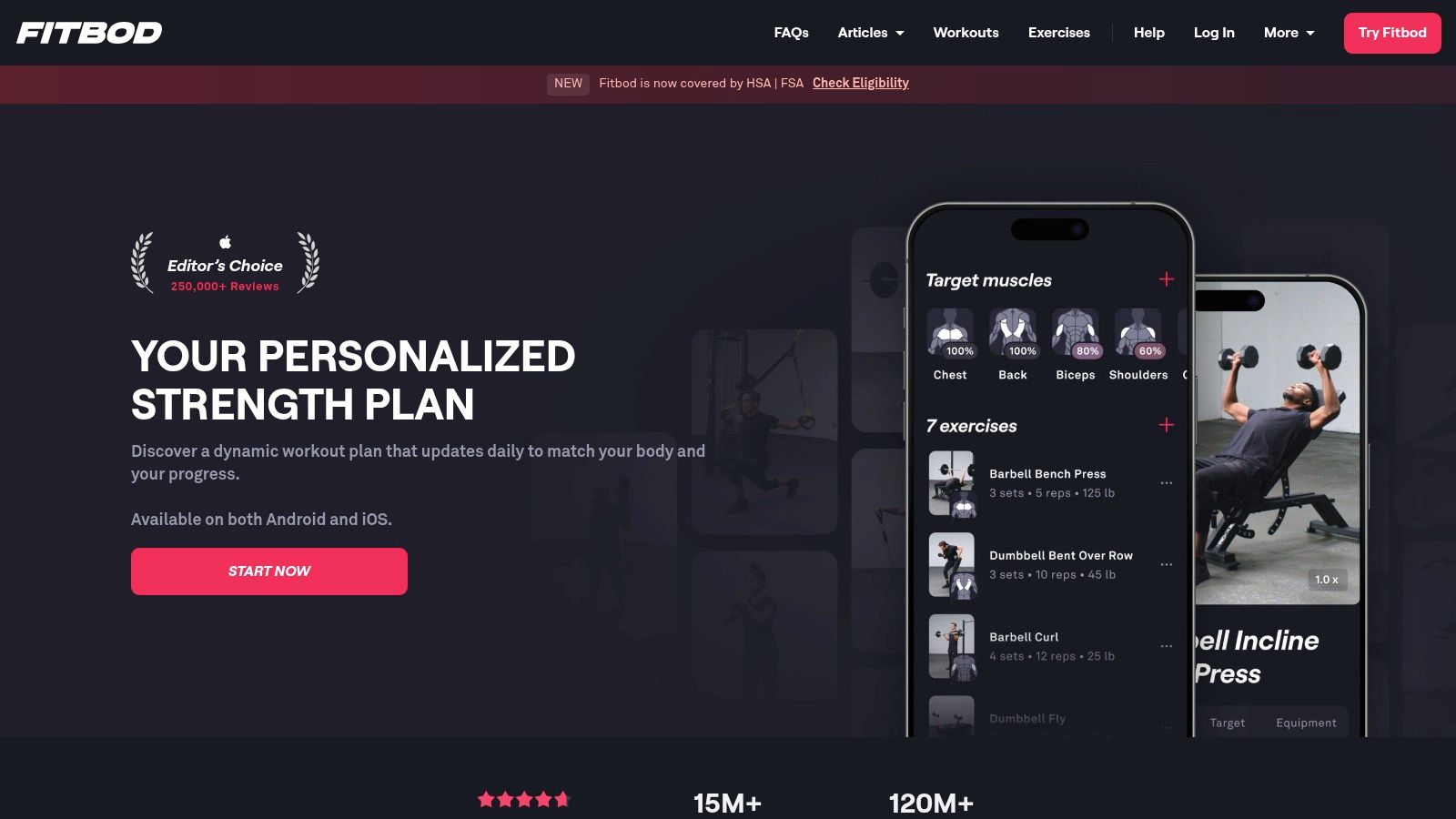
Its core strength lies in its ability to auto-regulate your training volume and intensity, targeting muscle groups based on their recovery status to prevent overtraining and maximize gains. This makes it one of the best fitness apps for iOS if your primary focus is structured, progressive overload in a traditional gym setting.
Key Platform Features
Fitbod’s smart algorithm and detailed logging features create a powerful feedback loop for strength development. The app provides a clear path forward, making it a strong choice for those seeking a more hands-off approach to workout programming.
- Algorithmic Workout Generation: Creates sessions based on your goals, available equipment (from bodyweight to full gym), and muscle recovery data.
- Progressive Overload Tracking: Automatically suggests increases in weight or reps to ensure continuous progress toward your strength goals.
- Extensive Exercise Library: Includes detailed instructions and video demonstrations for hundreds of exercises, filterable by muscle group and equipment.
- Apple Health & Watch Support: Integrates seamlessly to log workouts and factor your overall activity data into its recovery recommendations.
While its automated approach is a major benefit, users looking for more manual control can explore the value of a fully personalized workout plan app to fine-tune every detail of their training.
Website: fitbod.me
6. Strong (Workout Tracker)
Strong lives up to its name by offering a direct, powerful, and uncomplicated approach to strength training logging. It's designed for lifters who prioritize quick, efficient workout tracking over guided programming or video content. The app’s core strength lies in its fast, low-friction interface that lets you log sets, reps, and weight with minimal taps, getting you back to your workout faster.
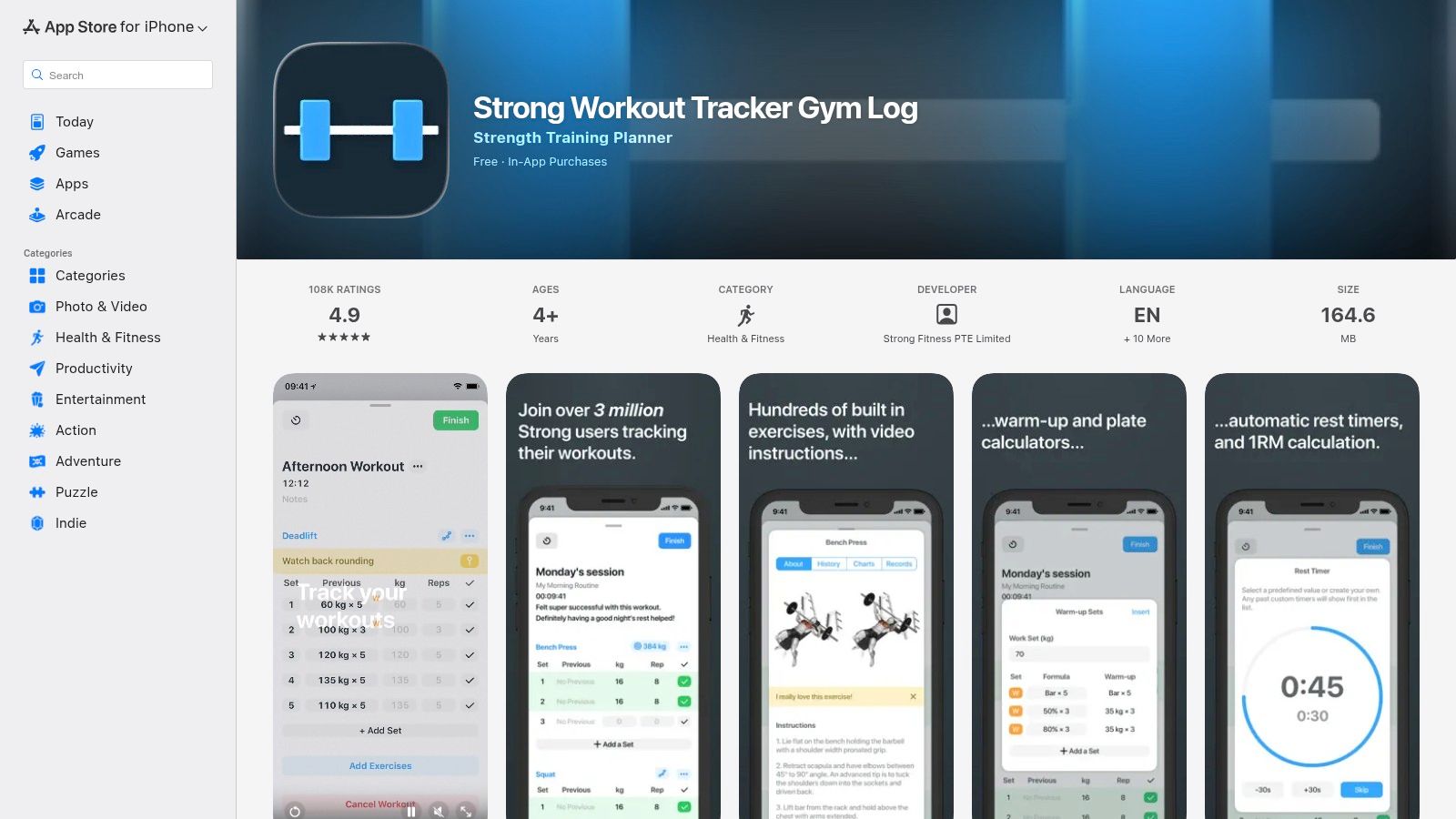
The user experience is clean and intuitive, earning it an excellent reputation on the App Store. It’s one of the best fitness apps for iOS for those who already have a program and just need a reliable digital logbook to track progress. It excels at showing your history for a specific exercise, making progressive overload clear and attainable.
Key Platform Features
Strong focuses on being the best logbook possible, with features that support serious, data-driven lifters. Its Apple Watch app is a standout, allowing you to log your entire workout from your wrist without ever touching your phone.
- Fast Logging: The interface is built for speed, including a plate calculator and features for warm-up, drop, and failure sets.
- Custom Routines: Build and save an unlimited number of your own workout routines with the PRO version for quick access.
- Data Export & Sync: Easily export your entire workout history to CSV and sync seamlessly with Apple Health.
- Body Measurements: Track key body metrics like weight and body fat percentage alongside your lift data to see a complete picture of your progress.
While Strong doesn't offer coaching, its robust tracking capabilities make it an excellent tool for those who prefer to manage their own training. Understanding the fundamentals of a quality gym workout tracker can help you maximize the data you collect in an app like Strong.
Website: apps.apple.com/us/app/strong-workout-tracker-gym-log/id464254577
7. Nike Training Club (NTC)
Nike Training Club (NTC) is a powerhouse of high-quality, on-demand workouts led by world-class trainers. It stands out by offering its entire extensive library of content completely free for Nike Members, making it one of the best fitness apps for iOS for those seeking guided training without a subscription. The app covers everything from strength and HIIT to mobility and yoga, with polished productions that feel motivating and premium.
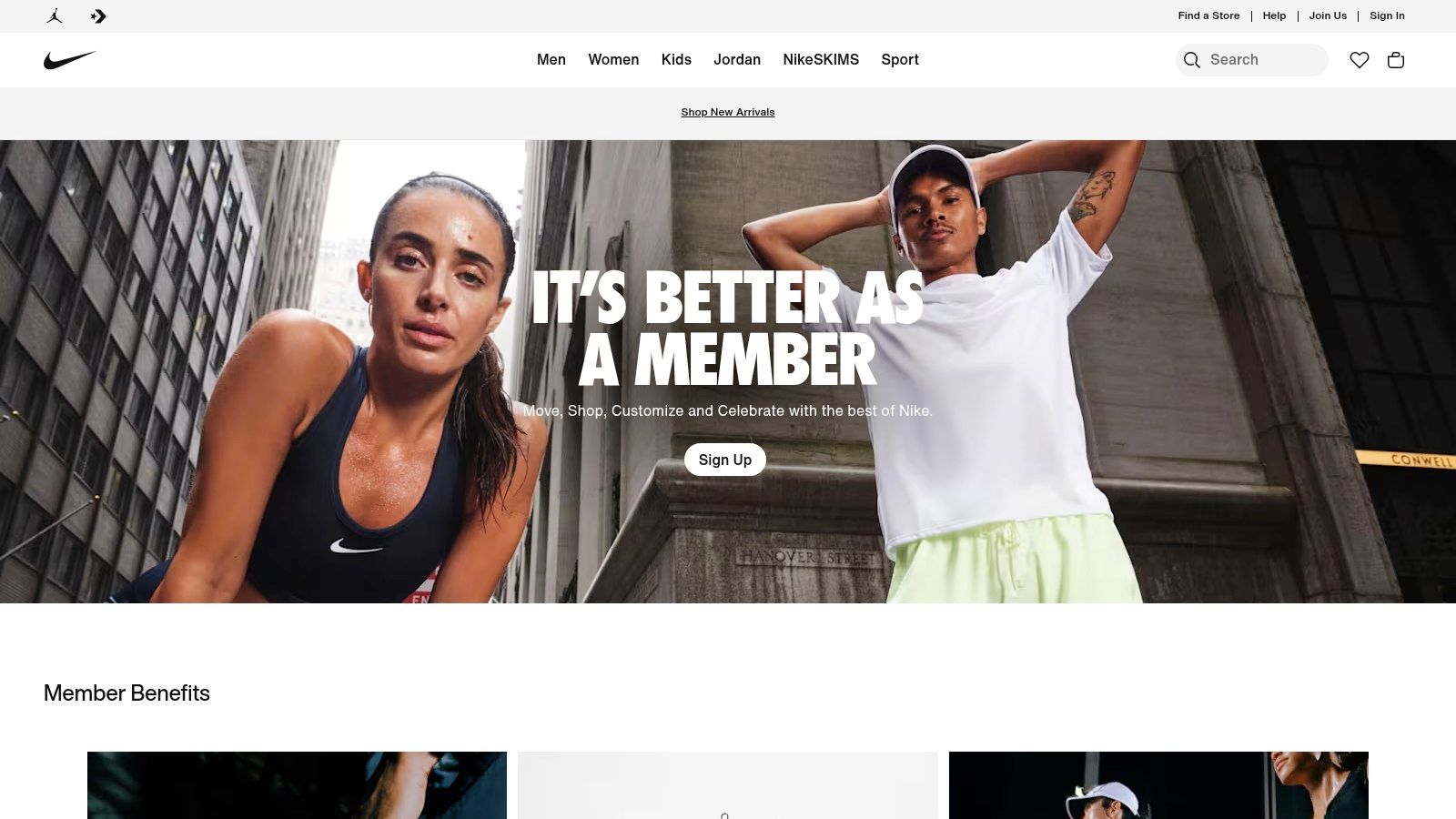
While its strength is in providing structured programs and individual workouts, NTC is less focused on granular weight and rep tracking compared to dedicated lifting apps. Its primary goal is to get you moving with expert guidance, making it an excellent choice for home workouts, gym sessions where you need a plan, or supplementing a more specific strength training regimen.
Key Platform Features
The app’s clean interface and simple onboarding process make it easy to find and start a workout immediately. It seamlessly integrates with other Apple services, providing a cohesive user experience for iPhone owners.
- Extensive Free Library: Access over 180 guided workouts and multi-week programs just by signing up for a free Nike Membership.
- Equipment-Optional Sessions: Many workouts are designed for minimal or no equipment, making it highly accessible for home fitness.
- Multi-App Integration: Pairs with the Nike Run Club app to consolidate activity and integrates directly with Apple Health to sync workout data.
- High-Quality Production: Features professional trainers and high-definition video, creating an engaging and immersive workout experience.
The focus is squarely on guided sessions rather than detailed logging, which may be a limitation for advanced lifters who need to track progressive overload precisely.
Website: www.nike.com/membership/free-running-training-apps
8. Peloton App
The Peloton App brings the brand’s signature high-energy, instructor-led studio experience directly to your iPhone, without needing any Peloton-branded hardware. It offers a massive library of live and on-demand classes spanning cycling, running, strength, yoga, and more, making it a versatile choice for users who crave variety and motivation. This app excels at creating a strong sense of community through leaderboards and engaging instructors.
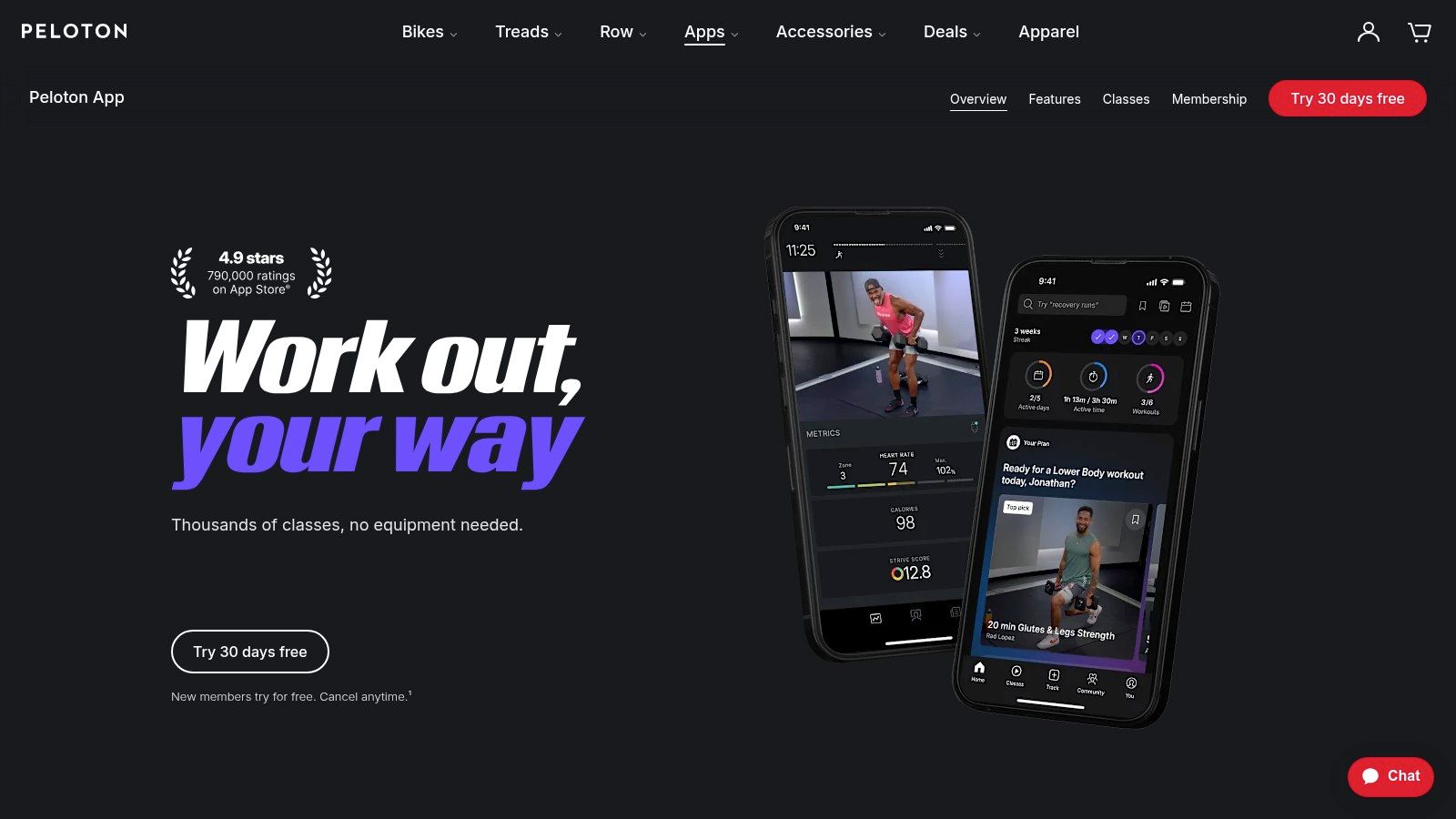
Unlike many apps focused solely on solo training, Peloton’s strength is its polished, production-quality classes that feel like a group fitness session. Its multi-platform support, including a robust Apple Watch integration for heart rate tracking, ensures a seamless experience whether you're at home with an Apple TV or on the go.
Key Platform Features
The app provides structured programs and challenges designed to keep you engaged and progressing toward your fitness goals. While the subscription is required for full access, the sheer volume and quality of content offer significant value for those motivated by guided workouts.
- Diverse Class Library: Access thousands of live and on-demand classes across numerous disciplines, from strength training and HIIT to meditation and outdoor audio runs.
- Charismatic Instructors: Follow world-class instructors who provide motivation, form cues, and curated playlists to energize your workouts.
- Structured Programs & Challenges: Participate in multi-week programs or monthly challenges to maintain consistency and work towards specific milestones.
- Multi-Device & Apple Watch Support: Stream classes on your iPhone, iPad, or Apple TV, and use your Apple Watch to track real-time metrics like heart rate and Strive Score.
While the tiered membership can be confusing and pricing may vary when subscribing through the App Store, the Peloton App remains one of the best fitness apps for iOS for users seeking high-quality, instructor-led content.
Website: https://www.onepeloton.com/app
9. MyFitnessPal
No fitness journey is complete without dialing in nutrition, and MyFitnessPal remains the undisputed leader in this space. While not a workout tracker itself, its role as a calorie and macro-tracking powerhouse makes it an essential companion to virtually any strength training program. The app's core strength lies in its colossal food database and lightning-fast logging system, which are critical for anyone serious about managing their diet.
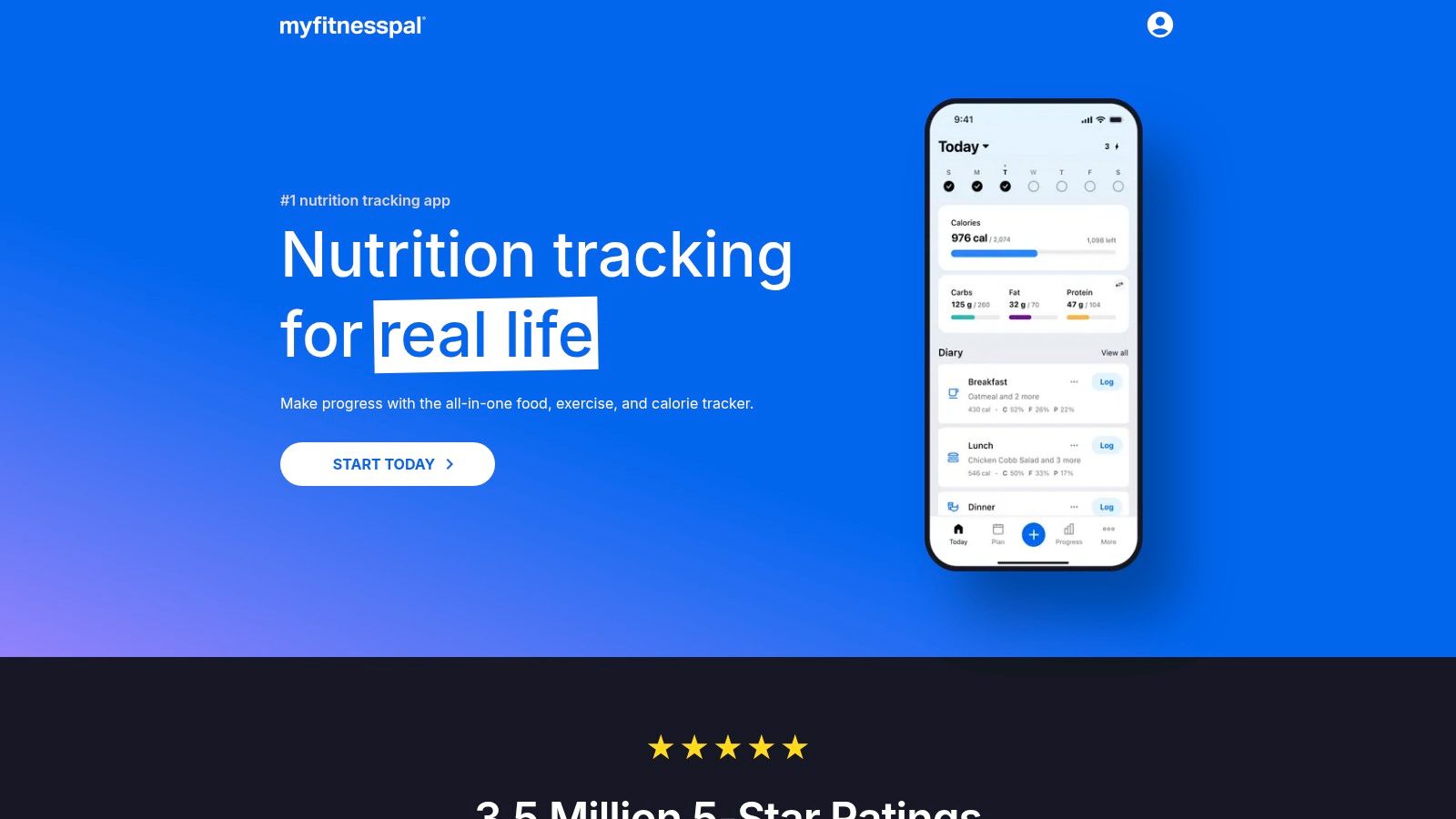
MyFitnessPal simplifies the often-tedious task of tracking food intake with its intuitive barcode scanner and saved meals features. By integrating with Apple Health and hundreds of other fitness apps and wearables, it centralizes your health data, giving you a complete picture of calories in versus calories out. This makes it one of the best fitness apps for iOS for a holistic view of your health.
Key Platform Features
The platform is designed for efficiency, helping you build a sustainable habit of food logging. The premium versions unlock more granular control, including custom macro targets per meal, net carb tracking, and guided meal plans to remove guesswork.
- Extensive Food Database: A massive, user-supported library of foods, including a fast barcode scanner for packaged items.
- Macro & Calorie Tracking: Set specific goals for protein, carbs, and fats to align your diet with your fitness objectives.
- Broad Integrations: Syncs seamlessly with Apple Health, Garmin, Fitbit, and many workout apps to automatically adjust calorie goals based on activity.
- Premium Meal Planner: The Premium+ tier offers automated meal planning and recipes tailored to your calorie and macro targets.
While the free version is robust, accessing advanced features like meal-specific macro goals requires a Premium subscription. Users have occasionally reported that pricing and feature availability can vary by region.
Website: www.myfitnesspal.com
10. FitOn
FitOn has carved a unique niche by offering a massive library of high-quality workout classes for free, making it one of the best fitness apps for iOS for those on a budget. The platform provides a wide array of on-demand classes, including HIIT, strength, yoga, Pilates, and meditation, often led by celebrity trainers. It stands out by removing the initial cost barrier that prevents many from starting their fitness journey.
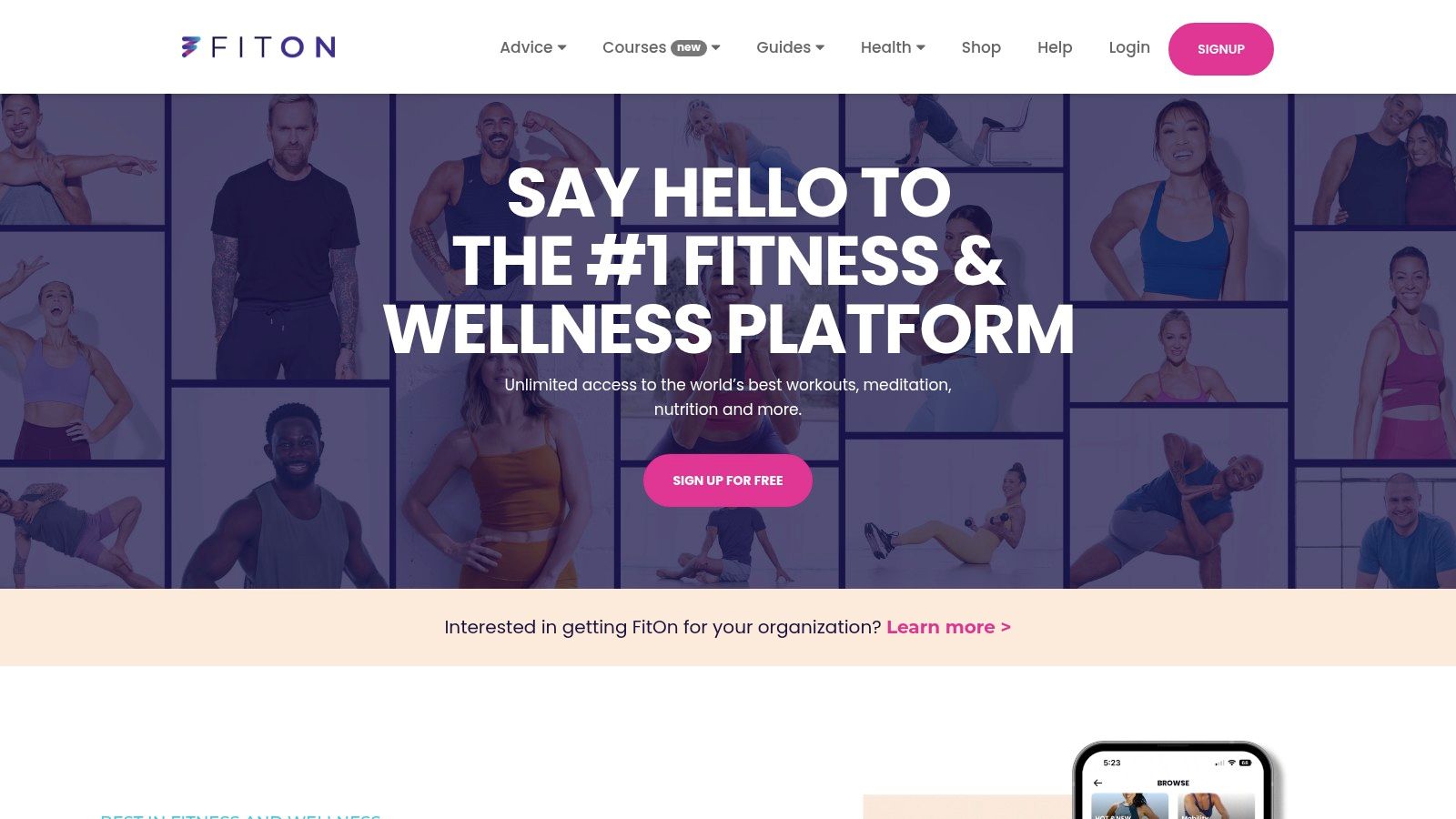
The app delivers a polished user experience with broad device support, including a native Apple TV app and casting capabilities, making it easy to follow along on a bigger screen. While the core workout content is entirely free, FitOn offers a PRO subscription for users who want advanced features like personalized meal plans, offline downloads, and premium music integration.
Key Platform Features
FitOn’s model is built on accessibility, providing a diverse workout library that caters to all fitness levels without an upfront investment. The app integrates well with the Apple ecosystem, offering Apple Watch support to display your heart rate on-screen during workouts.
- 100% Free Core Workout Library: Access thousands of classes across multiple disciplines like strength training, cardio, and yoga at no cost.
- Broad Device Support: Use the app on your iPhone, iPad, or stream workouts directly to your television using the native Apple TV app or other casting methods.
- Celebrity Trainers: Stay motivated with classes led by well-known fitness personalities and celebrities.
- Optional FitOn PRO: Upgrade for premium features including personalized meal plans, offline workout downloads, and integration with premium music services.
While the PRO tier unlocks valuable additions, its pricing can sometimes vary across platforms, which is a point to consider. However, the free version alone offers more than enough content to build a consistent and effective workout routine.
Website: https://fitonapp.com
11. Sweat (Kayla Itsines et al.)
Sweat is a powerhouse in the women's fitness space, offering a comprehensive platform built around structured, progressive training programs. Founded by trainer Kayla Itsines, it has expanded to include a diverse roster of trainers and over 60 programs covering everything from high-intensity interval training (HIIT) and strength to yoga and post-pregnancy recovery. It stands out by focusing on long-term progression rather than single workouts.
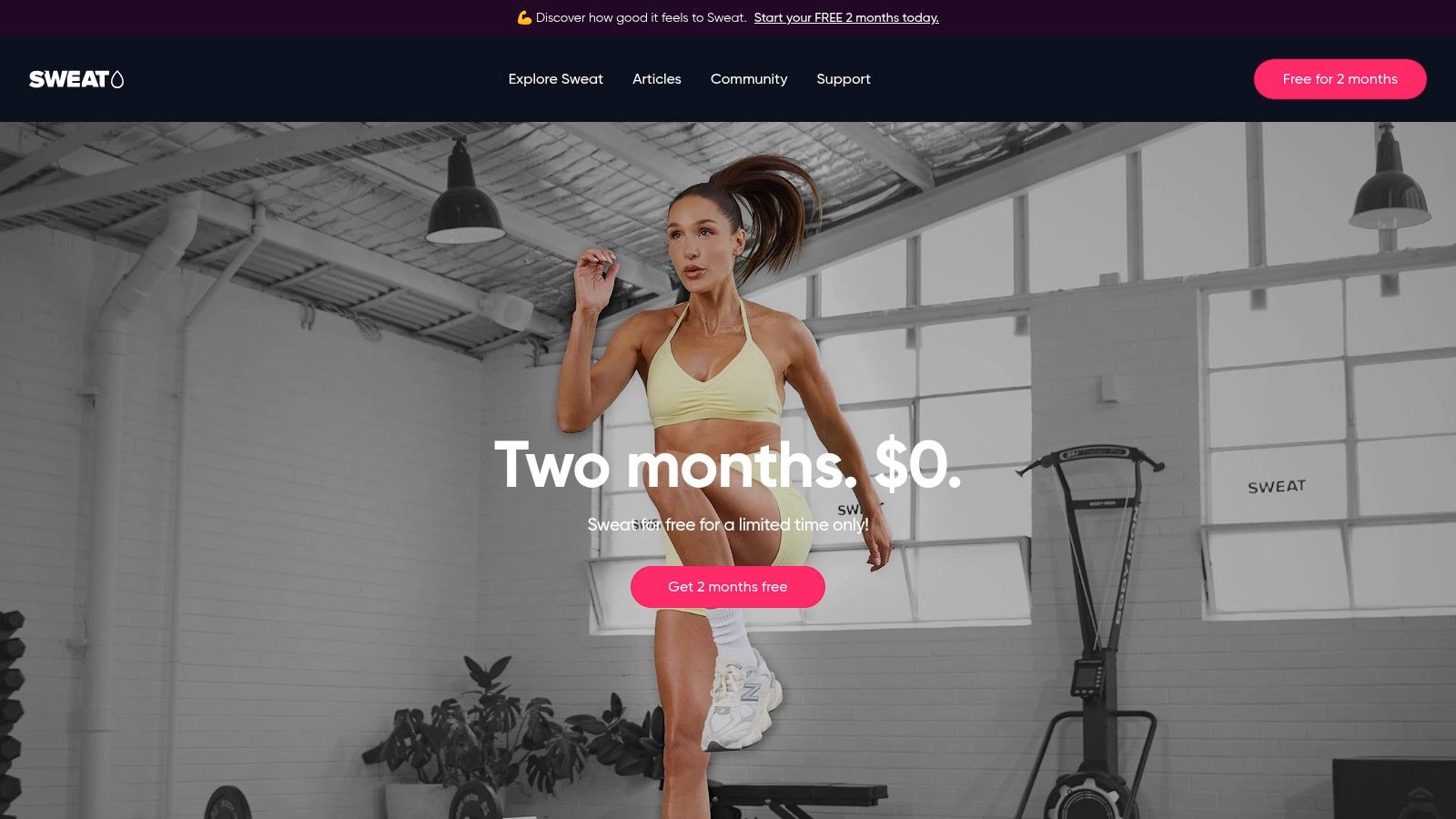
The platform’s core strength lies in its ability to keep users motivated through scheduled plans and frequent community challenges. This approach fosters consistency and helps users see tangible results over weeks and months, making it one of the best fitness apps for iOS for those seeking a guided, goal-oriented journey. The app's design is clean, intuitive, and fully integrated with Apple devices, including Apple TV for at-home workouts.
Key Platform Features
Sweat is designed to feel like having a personal trainer and a supportive community in your pocket. Its program-based structure eliminates guesswork, guiding you through each phase of your fitness plan.
- Progressive, Program-Based Structure: Choose from 60+ multi-week programs that are designed to build on your progress over time.
- Large Trainer-Led Catalog: Access specialized plans from world-class trainers, including dedicated post-pregnancy and mobility routines.
- Apple Ecosystem Support: Seamlessly stream workouts on your iPhone, iPad, or Apple TV for a versatile training experience.
- Community Challenges: Participate in regular challenges with the global Sweat community to stay engaged and push your limits.
While Sweat is a premier choice for women, its primary focus means it has less breadth for other user groups. Pricing can also vary significantly based on your region and the storefront you subscribe through.
Website: https://sweat.com
12. Runna
Runna is a hyper-focused training app designed to transform your running, whether you're tackling your first 5K or aiming for a new marathon personal best. It provides personalized, coach-built running plans that adapt to your progress, complete with specific pace targets, audio cues during your runs, and seamless Apple Watch and iPhone integration. It stands out by combining structured training with supplementary strength and mobility work.
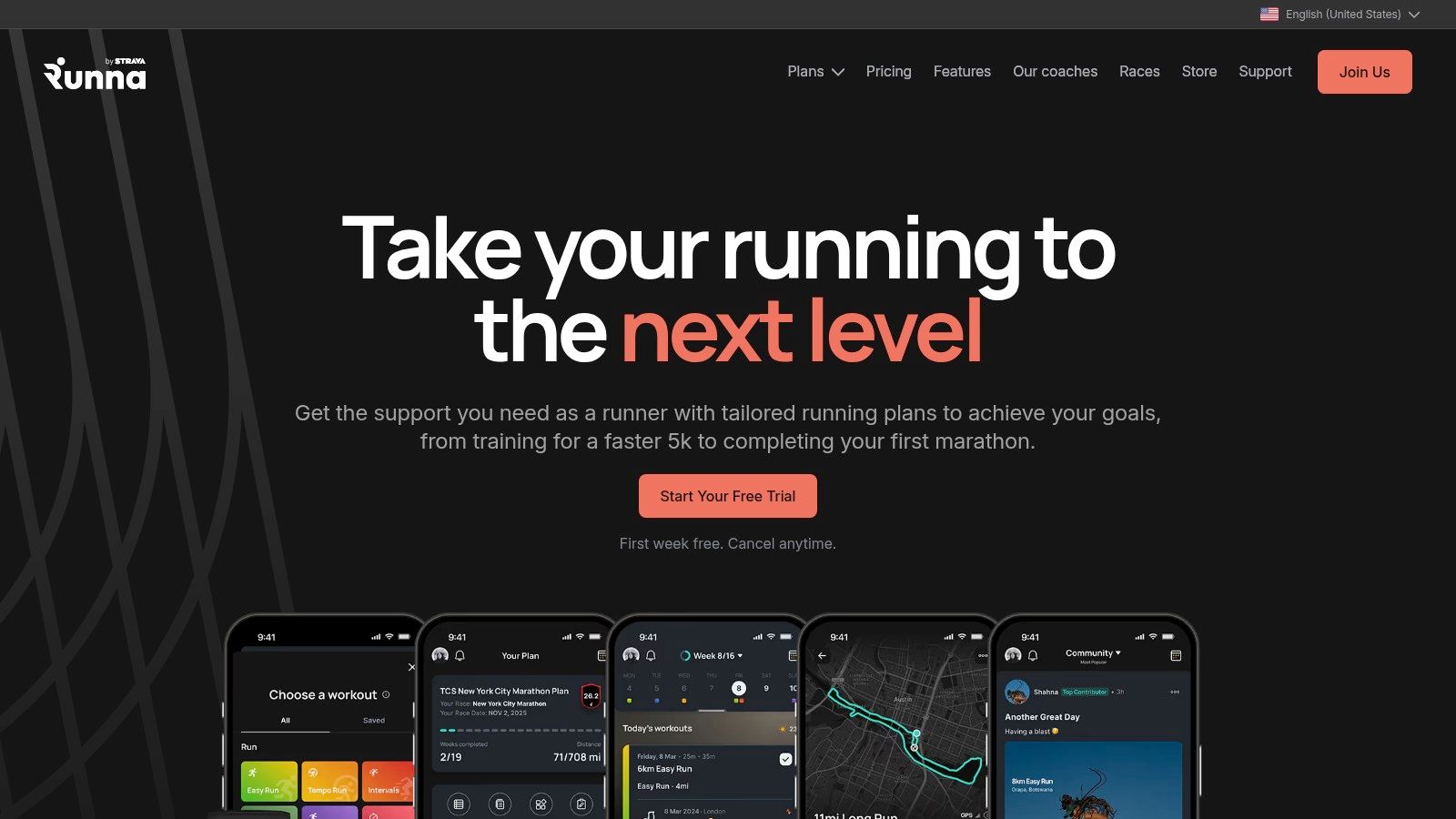
Unlike generic running trackers, Runna delivers a clear, progressive roadmap for race preparation, making it one of the best fitness apps for iOS for goal-oriented runners. Its plans adjust based on your performance, ensuring you're always training at the right intensity. The inclusion of strength workouts tailored for runners helps prevent injury and build power, a feature often overlooked in other running apps.
Key Platform Features
Runna provides a comprehensive ecosystem for runners, from initial planning to race day execution. The app offers a free forever starter plan for new or returning runners, with more advanced features and a wider range of plans available through a paid subscription.
- Adaptive Training Plans: Get personalized plans for distances from 5K to ultra-marathons that adjust based on your recent activity and pace.
- Integrated Strength Training: Access running-specific strength and mobility workouts to complement your cardio and reduce injury risk.
- Live Audio Cues: Receive real-time guidance on pacing and intervals directly through your headphones during your run.
- Wearable Sync: Natively supports Apple Watch and syncs with other devices like Garmin and COROS for a unified training log.
The primary focus on running means it's less suitable for those seeking an all-in-one fitness solution, but for dedicated runners, its structured approach is hard to beat.
Website: https://www.runna.com
Top 12 iOS Fitness Apps Comparison
| Product | Core features | UX & Quality (★) | Value / Pricing (💰) | Target audience (👥) | Unique edge (✨) |
|---|---|---|---|---|---|
| Built Workout 🏆 | Recovery heatmaps, exercise‑level logging, recovery‑aware AI coaching | ★★★★☆ | Free app + Premium (real‑time recovery, advanced AI) 💰 | 👥 Data‑driven lifters, trainers | ✨ Muscle‑specific recovery visualization + explainable AI |
| Apple App Store – Health & Fitness | App discovery, editorial curation, installs & subscriptions | ★★★★★ | Platform is free; app pricing varies by developer 💰 | 👥 iOS users & app seekers | ✨ Curated discovery, privacy labels |
| Apple Fitness+ | On‑demand studio classes, Apple Watch metrics on screen | ★★★★☆ | Subscription (often in Apple One) 💰 | 👥 Apple Watch + iPhone users | ✨ Best hardware/software integration |
| Strava | GPS tracking, segments, leaderboards, clubs & challenges | ★★★★☆ | Free + Premium (Summit) 💰 | 👥 Runners, cyclists, multisport athletes | ✨ Massive community & route discovery |
| Fitbod | Algorithmic workout generator, progression & equipment aware | ★★★★☆ | Subscription required for full features 💰 | 👥 Gym lifters wanting auto‑programming | ✨ Equipment‑aware progressive workouts |
| Strong (Workout Tracker) | Fast set/reps/weight logging, custom routines, CSV export | ★★★★★ | Free + PRO upgrade for advanced features 💰 | 👥 Lifters who want simple, fast logging | ✨ Low‑friction logging & robust exports |
| Nike Training Club (NTC) | 180+ guided workouts, programs, equipment‑optional sessions | ★★★★☆ | Free for Nike Members; some paid programs 💰 | 👥 Users wanting polished, coach‑led classes | ✨ High production value & free content |
| Peloton App | Live & on‑demand classes across many modalities | ★★★★☆ | Subscription with tiered pricing 💰 | 👥 Users seeking instructor‑led classes | ✨ Live classes + strong instructor community |
| MyFitnessPal | Extensive food DB, barcode scan, macro targets & integrations | ★★★★☆ | Free + Premium/Premium+ tiers 💰 | 👥 Nutrition‑focused users & trackers | ✨ Best‑in‑class food database |
| FitOn | Free workout library, celebrity trainers, Apple TV support | ★★★★☆ | Free core; PRO adds downloads/music/meal plans 💰 | 👥 Budget users & beginners | ✨ Truly free, broad class variety |
| Sweat (Kayla Itsines et al.) | Program‑based progressive plans, challenges, trainer catalog | ★★★★☆ | Subscription (region pricing varies) 💰 | 👥 Women seeking structured programs | ✨ Deep women‑focused progression & community |
| Runna | Adaptive running plans, pace targets, audio cues, Watch support | ★★★★☆ | Free starter plans; paid advanced plans 💰 | 👥 Runners training 5K→marathon | ✨ Coach‑built adaptive race plans |
Final Thoughts
Navigating the crowded landscape of the iOS App Store to find the perfect fitness companion can feel as challenging as hitting a new personal record. We've explored a dozen of the best fitness apps for iOS, each offering a unique approach to health, strength, and performance. From the comprehensive, data-driven ecosystem of Apple Fitness+ to the community-centric motivation of Strava and the guided, accessible workouts of Nike Training Club, the ideal tool truly depends on your individual path.
Your journey began with a specific goal, whether it was to build muscle, improve cardiovascular endurance, or simply introduce more structured movement into your life. The key takeaway from our deep dive is that technology is no longer just a passive tracker; it's an active coach, a meticulous planner, and a source of invaluable data. The right app doesn't just count reps; it provides context, predicts performance, and helps you understand the "why" behind your training.
How to Choose Your Ultimate Fitness Partner
Making the final decision requires a moment of honest self-assessment. Don't just download the most popular app; select the one that aligns seamlessly with your lifestyle, personality, and specific fitness ambitions.
To crystallize your choice, consider these critical questions:
- What is my primary training style? Are you a dedicated strength athlete who needs granular control over volume and progressive overload (like in Built Workout or Strong)? Or are you focused on HIIT, running, and class-based cardio (like Peloton or NTC)? Your training discipline is the most important filter.
- How much guidance do I need? If you're new to fitness or prefer structured, follow-along workouts, apps like Apple Fitness+, Fitbod, or Sweat offer excellent hand-holding. Conversely, if you're an experienced lifter who brings your own programming, a powerful and flexible logger is your priority.
- What kind of data motivates me? Some people are driven by closing rings and hitting streaks (Apple Fitness+). Others thrive on detailed analytics, charting one-rep maxes, and tracking training volume over time. Understanding your motivational triggers will point you toward the right interface and feature set.
- What is my budget? Our list includes fantastic free options like Nike Training Club and FitOn, as well as premium subscription services. Evaluate whether the advanced features of a paid app, like AI-generated programs or in-depth analytics, provide enough value to justify the recurring cost.
Integrating Your New App for Long-Term Success
Once you've made your selection, successful implementation is key. Don't just download it and hope for the best. Take a dedicated hour to set up your profile completely, input your current stats, and explore the app's core features. Connect it to Apple Health to ensure all your activity data is centralized, creating a holistic view of your wellness.
Most importantly, commit to using it consistently for at least two to four weeks. Building the habit of logging your workouts, tracking your meals, or following a guided session is what transforms a simple app into an indispensable part of your fitness journey. The initial learning curve will quickly give way to a streamlined process that supports, rather than complicates, your goals.
Ultimately, the best fitness apps for iOS are the ones that remove friction, provide clarity, and empower you to show up for yourself day after day. Whether it's the social motivation from seeing a friend's run on Strava, the satisfaction of a perfectly planned strength session in Built Workout, or the convenience of a quick NTC workout at home, your iPhone can be the most powerful tool in your gym bag. Choose wisely, commit fully, and get ready to unlock your next level of fitness.
Ready to move beyond generic workout logs and embrace a platform built for serious strength athletes? Built Workout offers the sophisticated tracking, social integration, and powerful analytics we highlighted, making it a top contender for anyone dedicated to progressive overload and data-driven results. See why it stands out among the best fitness apps for iOS by exploring its features at Built Workout.